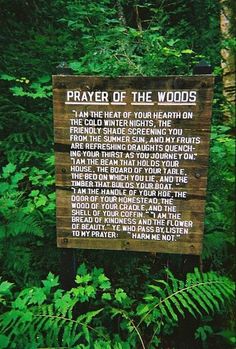
n. a central point, as of attraction, attention, or activity
v. to direct one’s attention or efforts
Author: Grace
Review: Eligible
*Note: This is a review of a book I have already finished and therefore contains spoilers. Proceed with appropriate caution.
I’m a sucker for anything involving Pride and Prejudice, particularly modern retellings. So when I saw Curtis Sittenfeld’s Eligible on my library’s Lucky Day shelf (relatively new and popular books you can check out for only a week, no renewals), I snatched it up, anticipating a fun, if fluffy, addition to my P&P mental shelf.
I ended up feeling very divided about the book. Sittenfeld’s modernization of Austenian issues was admirable and unexpected, which is difficult to achieve in an adaptation of such an iconic work. The main characters’ relationships remained intact, with Lydia and Kitty as joined at the hip as ever and Liz and Darcy shooting barbs at one another. The portrayal of Jane as a 40-year-old seeking to have a child on her own is one of the most independent adaptations I’ve seen of the eldest Bennet sister. One of my favorite parts was the change in Liz’s relationship with Catherine de Bourgh, who appears here as a famous feminist speaker rather than a disapproving aunt; the switch from condemnation to commendation was a pleasant surprise! The author even went so far as to split the scurrilous Wickham into two questionable love interests: Jasper Wick acts as Liz’s long-term (married) boyfriend, with the original Wickham’s jerkier aspects and scandalous back story; Ham is a decent guy who happens to be transgender, which sends the old-fashioned Bennet parents into conniptions when he elopes with Lydia. So while the story is familiar (Liz is prideful, Darcy is prejudiced, they love each other anyway), it wasn’t exactly predictable.
But for a familiar yet engaging story, the book was slow. Sittenfeld used Austen-esque sentences to describe her modern characters, with phrasing more suited to a Regency-era parlor game than binge-watching a reality dating show. The chapters were ridiculously short, ranging from half a page to maybe seven pages; it was as if rather than adding a line break between scenes, she decided to just give every separate scene its own chapter. Then Sittenfeld fleshed out the Bennet family’s financial instability and added Jane’s pregnancy and a reality show wedding (and all the behind-the-scenes experiences of filming such a thing) to a novel that already has plenty of connected story lines. And she wrote all of those new aspects in the same short-chapter, long-sentence style. It added up to constantly feeling like I must have made a lot of progress, then being surprised by how few pages I had actually read.
I also found myself truly disliking Elizabeth Bennet (called Liz here) for the first time in any version. True, her pride and stubbornness are central character flaws, without which her eventual growth as a person and subsequent coupling with Darcy would fall flat. But Sittenfeld brings out a new side of Liz that frankly felt untrue to the character. In Austen’s original story, Lizzie asserts her independence by refusing to marry someone she does not love. This is radical for the time she lives in, but understandable for the character. In Eligible, Sittenfeld extends that desire for control over one’s own life into an almost manic desire to control her whole family. Liz apparently needs to parent her own parents, going so far as to list their house for sale without telling them. I understand wanting to help fix one’s family problems, but is it really possible that someone as smart as Lizzie Bennet would decide that being her family’s savior means steamrolling over everyone, kicking her family out of their home, and insisting on overseeing all the financial decisions from now on?
Ultimately, this felt like fluff that didn’t know it was fluff. The three stars I gave it on Goodreads were largely due to the love I already bear for the characters and their original tale.
Have you read Eligible? Have you ever read any adaptations of a favorite classic that disappointed you?
Brain in Revolt
I just finished rereading the entire Calvin and Hobbes collection for the umpteenth time. I’m so familiar with the eponymous boy and tiger that I found myself looking forward to specific strips, especially the Sunday ones with their bold colors and creative layouts.
Some of my favorites are when Bill Watterson shows little Calvins running around with goggles and helmets in Calvin’s brain. These mini versions of Calvin operate his life like the crew of a spaceship. They attempt to recalculate when Calvin missteps and falls down the stairs. They descend to the subconscious, a cluttered dump of a place, to retrieve movie reels for that night’s dreams.
I like this imagery. There’s something appealing about personifying the decisions and operations of one’s brain, perhaps because it makes it seem like there are little allies inside one’s head working to one’s consistent benefit. After all, if they’re part of you, they must want your wellbeing, right?
Depression, to me, feels like a mutiny. It feels like I can never quite trust the little workers running around in my head because they get bored, or they get lazy, or they get moody, and without consulting the protocol for Normal Operations or checking in with Management (which would ideally be, y’know, me) they decide that the Mood Balance should shift to sad. Or irritable. Or let’s just throw the whole system into neutral, and coast for a while, which is not as bad as sadness or anger but is still less than ideal for a productive, happy life.
I can do certain things to prevent these shifts. I can be mindful of my stress levels, my eating habits, my sleep schedule, my exercise routine. I can watch that Christian the lion video if I need to cry. I can read Calvin and Hobbes if I want to cheer up.
But all of that feels like placating the tiny workers, keeping them in check. It feels like I am not in control. And shouldn’t I be? This is my brain, mine, but I’m not calling the shots.
This, I think, is the problem with mental health. It’s invisible, and even when it is made visible, whether through the images of neurons firing in our high school textbooks or through the imagined Mini-Me workers of a cartoonist, there remains a certain expectation of ownership. The owner of the brain in question is supposed to be able to squash any rebellion. But how do you do that when the center of control is the part of you that’s rebelling?
Peace Is Not What We Should Pray For
I have almost reached the regrettable conclusion that the Negro’s great stumbling block in his stride toward freedom is not the White Citizen’s Counciler or the Ku Klux Klanner, but the white moderate, who is more devoted to “order” than to justice; who prefers a negative peace which is the absence of tension to a positive peace which is the presence of justice; who constantly says: “I agree with you in the goal you seek, but I cannot agree with your methods of direct action”… Shallow understanding from people of good will is more frustrating than absolute misunderstanding from people of ill will. Lukewarm acceptance is much more bewildering than outright rejection.
Dr. Martin Luther King, Jr. “Letter from a Birmingham Jail”
“For peace in our nation.” I paused. “We pray to the Lord.”
The congregation, slower in its responses here than in my home parish on the other side of the state, mumbled, “Lord, hear our prayer.”
It’s not my job to improvise the intercessions – lectors just read, we don’t write – but at that moment I wished I could add something to the single, well-meaning, inadequate line of that particular prayer.
Because peace alone is not good enough.
Peace is easy for people like me to find. Peace is what we get because we are white, and heterosexual, and cisgender, and above the poverty line. Our peace is not truly disturbed by the reports on TV of violence elsewhere, of fear elsewhere, of hate crimes elsewhere, because, if you noticed, it is always elsewhere, not next door. And even if it is next door, we can draw the blinds. We can change the channel. We can shuffle to and from our cars and listen only to radio stations that agree with us and read only the same old books we have always read and we can do this because we are the ones who are represented in those places. We have the option of shutting ourselves off from those different from us. And when we cannot ignore what’s happening outside our comfort zones, we can at least use it to reinforce the mentality that allows us to shake our heads gently and think, “At least We are not Like Them.”
Peace is easy for people like me to find.
But it is a “negative peace which is the absence of tension.” The things that might bring us true peace, a “positive peace which is the presence of justice,” are more complicated. And it’s not a terribly peaceful process.
Probably the writer of that intercession was hoping for a deeper peace, not just peace of mind or the bliss we speak of that comes from ignorance, but the peace we are promised in the Gospels, the kind “that surpasses all understanding,” which is good because a lot of other things right now surpass understanding. But we are creatures who need the process spelled out for us, the true meaning defined and articulated point by point.
So this is what I’m praying for.
For peace and protection of marginalized groups and minorities as they face growing violence and aggression on top of the daily struggle of navigating a culture in which they are not the group in power.
For peace and communication between opposing views, that they may allow themselves to be coaxed toward a middle ground in which they can recognize the humanity of the Other standing before them.
For peace and humility in our leaders, that they may recognize their responsibility to those they represent and to the world as a whole.
For peace and true justice as we continue to work toward equality and a more perfect fulfillment of the American vision.
Lord, hear our prayer.
Purpose
the reason for which something exists or is done, made, used, etc.an intended or desired result; end; aim; goaldetermination; resoluteness
Review: The Tearling Trilogy
*Note: This is a review of books I have already finished and therefore contains spoilers. Proceed with appropriate caution.
I picked up The Queen of the Tearling by Erika Johansen on a whim at my local bookstore. It had a pretty cover, and the blurb on the back sounded like one of those fantasy novels I’ve enjoyed in the past but probably wouldn’t reread ever again.
That was the first time Johansen turned my assumptions upside down.
The book begins with an armed guard fetching the 19-year-old Kelsea, the queen ascendant, from her foster parents’ cottage in the woods to take her to the Keep for her coronation. Sounds traditional enough – a hidden heir, a medieval-ish setting, mysterious circumstances and vague dangers. But the Tearling, Kelsea’s struggling kingdom, is anything but traditional.
I have to review the Queen of the Tearling trilogy as a whole because it operates best that way. A coworker of mine saw me reading the first book at work, freaked out, loaned me the sequel, and graciously let me read her copy of the final book (once she was done with it, of course) when it came out. She pointed out that the first book works mainly to set up the world, nothing truly exceptional (I thought it was well-written, but so are many traditional fantasy books). It’s the second book and its use of magic and time that break new ground in fantasy worldbuilding. Discovering the true nature of the Crossing that brought settlers to the Tearling was just so great, even in a genre that tends toward sudden twists (and that’s all I’m going to say about it because I don’t want to deprive anyone of reading Johansen’s work by giving my much less wonderful paraphrase here).
The Tearling trilogy consistently challenges conventions of the fantasy genre, setting readers up to anticipate tropes and not really mind it, because we like the characters and would appreciate them anyway – then taking a sharp left turn and refusing to fulfill those tropes. For instance, the identity of Kelsea’s father is a longstanding mystery throughout the three books, with any number of powerful, immortal, or badass candidates available. Then it turns out to be someone who died in the first book, someone with a hamartia, someone who was not special beyond being dear to his friends. But it doesn’t fall flat, because in every instance of these unexpected twists, major or minor, Johansen stays true to the integrity of the world she’s created.
One of the things I appreciate most about this world is its strong women. From Kelsea herself to her adversary the anonymous Red Queen to the kickass bodyguard of the Tearling’s founder, there is no dearth of women wielding power here – and diverse kinds of power too. There are several survivors of domestic abuse. There are physical fighters. There are intelligent teachers who strive to pass on knowledge. But Johansen’s world does not lack shallow, weak, or cruel women either. There are women who turn bitter from their trauma, and women to whom remarkable things do not come naturally. There are women who have no idea what they want, and women consumed by their desires. Kelsea in particular walks a thin line, observing and even living in others’ stories (more on that in a minute) while she tries to decide how to harness or quash her own great temper.
Seeing so many different women be allowed to live out so many different endings and populate the world just as truthfully as the men made this a welcome addition to my bookshelf. Whereas other novels I’ve read, however well-intentioned or well-executed, can tend toward only one or two main female characters with the rest being mere props (e.g., the Badass Freedom Fighter, the Moody Mysterious Maven, the Unexpectedly Tech-Smart Plain One), in my opinion, the majority of Johansen’s female characters were given the kind of detailed attention that transforms characters into people.
I think honestly it was the characters that made me fall in love with these books, and Johansen’s loyalty to and respect for those characters’ authenticity that made the whole trilogy so enjoyable. The third book is a masterful conclusion, sweeping readers up and hurtling along toward an ending that will probably be nearly as polarizing as the series finale of How I Met Your Mother. If you enjoy any type of fantasy, I highly, highly recommend all three books (in order, of course).
The Queen of the Tearling – 4/5 stars
The Invasion of the Tearling – 5/5 stars
The Fate of the Tearling – 5/5 stars
Review: Grimm’s Last Fairytale
I’ve always liked the darker versions of beloved fairytales. There’s something fun about knowing the grisly details behind the glitter and glamour, perhaps because it makes sense to me that the malevolent beings in these stories should be harder to silence, harder to kill.
When I picked up Grimm’s Last Fairytale, I thought it was biographical, something about the Brothers Grimm and their fantastical collection of dark tales. But when it turned out to be a historical novel, I was pleasantly surprised. Middleton takes three storylines and braids them together like Rapunzel’s hair: the present, where Auguste accompanies her aging uncle Jacob Grimm around the German countryside of his youth, hoping to discuss family history he will not share; the past, where Jacob and Willi grow up together from happy boys to the family’s sole breadwinners to political activists; and some other realm, where a boy is sent by his mother to find a princess in the Rose King’s abandoned court.
Grimm himself is the common denominator throughout the book, slipping in and out of dreams that just might be the boy’s journey to the briar-bordered, sleeping palace – just might be, mind you, because here, reality is uncertain. But the relationships between the major characters prevent the book from being too abstract. Auguste’s hero-worship of her enigmatic uncle, the mutual devotion of the Grimm brothers, the boy’s unwavering loyalty to his mother, and even the manservant Kummel’s struggle to remain indifferent to his eccentric employers deepen the reader’s interest in the already engrossing plot.
There’s a lot of meat to this story: a man growing old, a lifetime of responsibilities piled up behind him; a woman whose life is on pause until she gathers the courage to ask the question burning a hole in her mind; the backstory of a well-known childhood tale. And that’s not even counting the historical context that pokes through in parts of Grimm’s life, particularly as his deeply held belief in the unification of Germany’s many little kingdoms conflicts with the world events around him. Then there’s Middleton’s gorgeous, expressive writing to carry it all.
While this type of dark, multiple-storyline book isn’t for everyone, I found it highly enjoyable and gave it 4 out of 5 stars on Goodreads.
What’s your favorite fairytale? Would you want to know the dark version behind it?
Misfits
something that fits badly, as a garment that is too large or too small.
a person who is not suited or is unable to adjust to the circumstances of his or her particular situation
It’s bothered Bird and me for years. Every Christmas Rudolph the Red-Nosed Reindeer comes on and every Christmas we wonder what on earth is wrong with the doll on the Island of Misfit Toys.
Turns out, according to producer Arthur Rankin, it’s psychological. In a 2007 NPR interview, he said that Dolly’s problem was low self-esteem and doubting herself. Depending on the backstory, it sounds like a similar situation to Jessie from Toy Story 2: after being rejected by her human owner, Dolly doesn’t trust her ability to be a good companion to another person. She’s hurt and depressed.
Some people dismiss this as inserting modern psychobabble into a cartoon from 50 years ago. This post claims that the alternative explanation is “as plain on the nose on your face” because the thing that actually makes Dolly a misfit is her lack of a nose.
I disagree. For one thing, plenty of cloth dolls in that style and time period didn’t have noses, or eyebrows, for that matter. And for another, the majority of the misfit toys are not simply missing something. Some fundamental part of them has been replaced with something different that interferes with their traditional function. The train has square wheels. The cowboy rides an ostrich. The bird swims but cannot fly. (OK, the elephant has the addition of polka dots, but he’s also a white elephant, which suggests being historically unwanted in the first place.) These toys are misfits because something in them has changed to the point that they no longer fit the mold, and something would have to change again for them to be considered “normal.” It’s not a one-step fix.
That’s why Dolly’s psychological misfit-ness rings true (for me, at least). She needs more than a few stitches or a new dress. There is something about her, as with the rest of the toys on the Island, that fits badly, that is not suited to her situation. The visibility or invisibility of her struggles does not alter their validity.
And even if the explanation was inserted later to cover up some forgetfulness on the writers’ part, I’ll take any opportunity to point to well-known characters in popular culture who can help me normalize mental health.
Words That Haunt Me
I have a little notebook with a cover like the Penguin Books version of Orwell’s 1984, two orange stripes framing the title spelled out in the center and the classic penguin eyeing me from between the words “complete” and “unabridged.” I regularly lose and rediscover this notebook over the course of the year. When I know where it is, I use it to record my favorite quotes, snippets of poetry, or bits of dialogue from various sources. Whenever I lose it and find it again, I reread the whole thing, reminding myself of what was important to me when I wrote down that batch of quotes, that particular conversation from the TV show Bones, this epigraph from a novel I’ve otherwise forgotten.
A little while ago, I read this wonderful post from Cats and Chocolate, and it made me reach for the little Penguin notebook because I, too, wanted to share the words that haunt me.
So here they are:
The realm of fairy-story is wide and deep and high and filled with many things: all manner of beasts and birds are found there; shoreless seas and stars uncounted; beauty that is an enchantment, and an ever-present peril; both joy and sorrow sharp as swords.
In that realm a man may, perhaps, count himself fortunate to have wandered, but its very richness and strangeness tie the tongue of the traveller who would report them.
And while he is there it is dangerous for him to ask too many questions, lest the gate should be shut and the keys be lost.
-JRR Tolkien
For the longest way round is the shortest way home. ~Mere Christianity, CS Lewis
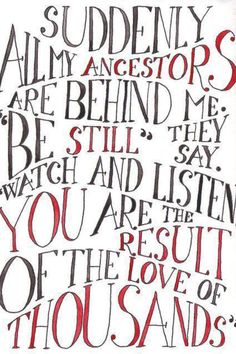
Snatching the eternal out of the desperately fleeting is the great magic trick of human existence. ~Tennessee Williams
The words we take into ourselves help to shape us…They build and stretch and build again the chambers of our imagination. ~The Child That Books Built, Francis Spufford
Let us not take it for granted that life exists more fully in what is commonly thought big than in what is commonly thought small. ~Virginia Woolf
Some days I am not sure if my faith is riddled with doubt or whether, graciously, my doubt is riddled with faith. And yet I continue to live in a world the way a religious person lives in the world; I keep living in a world that I know to be enchanted, and not left alone. I doubt; I am uncertain; I am restless, prone to wander. And yet glimmers of holy keep interrupting my gaze.
~Still, Lauren Winner

People need stories more than bread itself. They tell us how to live and why.~The Storyteller, Arabian Nights
NaNoWriMo Declaration
Today is the first day of National Novel Writing Month, or NaNoWriMo.
For the past few years, I have promised myself I will “win” NaNoWriMo by meeting the goal of finishing a 50,000+ word manuscript. The idea is not to edit, not to get a book published, but simply to write down the whole damn thing and get that first draft to exist at all. The new year is the time for revising and querying. November is for writing furiously, frantically, every single day, in an effort to get that draft done.
But I haven’t won. I’ve abandoned all my past stories after a few days. This year, though, relatively soon after NerdCon: Stories and with my PNWA and feminism publishing connections behind me, not to mention a bunch of free time on my hands, I’m swearing to at least write something every day this November. I might not finish my manuscript. It would be nice if I could. But I will put words on the page once a day for this whole month.
Or at least I’ll try!