My Life in Books, Part 3: Writing Guides

I love books, and I love writing.  It follows that I would have several books about writing.

1. Writing Magic by Gail Carson Levine
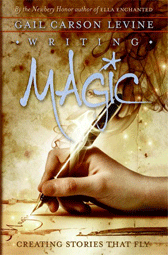
writing_magicMy parents bought this for me at a Scholastic Book Fair in elementary school and I had read it by the time we got home.  So I promptly read it again.  Already a fan of Gail Carson Levine’s Ella EnchantedThe Two Princesses of Bamarre, and The Princess Tales series, I wanted to learn how one of my favorite authors made her books come alive.  It might be written for 4th graders, but I’ve revisited the prompts and advice in this book time after time, even now that I’m in college.  This was the book that instructed me never to get rid of anything I write – and, cringe-worthy as some of my early “stories” are, I’ve followed that mandate ever since I read it.

I think reading this was also a step in taking ownership of my writing process.  At one point, Levine writes that to her, revision is a relief: “When I’m working on a first draft, I feel like a prisoner…I notice a bit of moisture condensing on the walls, four or five beads of water.  Each bead is an idea. I scrape them off and write feverishly till I use them up.  Then I wait for more moisture.  But when I finish my first draft, the walls come down…No more waiting for condensation.  All I have to do is make the book better.”  I feel the opposite way.  I hate revising.  It feels like I’m penned in, cut off from the excitement of finding out where the story goes.  But that, Levine acknowledges, is just as legitimate a process as her own.

2. Bird by Bird by Anne Lamott

download (5)Part memoir, part writing advice book, part general life advice book, this is another one I reread over and over.  I just love the way Lamott writes, the anecdotes she tells, and the brutal honesty she displays about writing.  It sucks sometimes, trying to be a writer.  Lamott doesn’t romanticize it, but she also understands that it’s not about fun (or at least, not entirely).  It’s that you have to write, or go crazy.  Or maybe a little bit of both.

Lamott gives advice more episodically than anything else, but that makes her relatable as another writer.  When I discovered Levine’s writing guide, I was looking up to an idol; this was my introduction to Lamott’s writing, so I took the advice differently.

Best of all, the stories she tells and the people she quotes send me running to look them up.  I actually bought another book on this list purely because Lamott quotes from it a few times.

3. Do Story by Bobette Buster

do storyThis one has a bit of a back story.  I found it originally in a bookshop down an alley in Nottingham, UK, but didn’t have enough cash on hand.  When I went back, the last copy had been sold – a trial run of only 5 copies, the proprietor said.  But if I emailed him, he’d let me know when he got another order in.  Which turned out to be the day I went home.  So instead he put me directly in touch with the publisher so I could order my book, regardless of whether he ever saw a penny.  I think I love the book more for the story of obtaining than for any advice it gave me.  (So by the way, if you’re ever in Nottingham, go find Ideas On Paper down an alley from Market Square – it’s worth it!)  Although this little book is more about storytelling in general than writing specifically, I liked what it had to say.  It emphasizes the idea that everyone has a story to tell, and everyone’s story is valuable.  It also plucks examples from history, showing how our ever-shifting global culture depends on stories like ours, and on telling those stories well.  “And, why should you do this?  Risk your vulnerability?  Because…someone is telling a story all the time…it is necessary for us to harness our own stories, and tell them well.  If not, then someone else will come in and wallpaper our culture with their stories…In the end, all you have is your story.  Tell us your story.  Do.”

4. Writing Down the Bones by Natalie Goldberg

writing down the bonesAfter reading excerpts from various bits and pieces of this book in numerous creative writing classes, I figured I might as well go ahead and read the whole thing.  Specifically, I loved the chapter/section/essay on living twice.  I loved the idea that being a writer makes you experience the world differently, and not always at the same pace as everyone else.  This is also a book that can be read in fits and starts, depending on how much time one has.  I haven’t read all of it, but I read the sections I need when I need them.

Really Really Quiet Workouts

I hate having people I know witness me exercising.

Surprisingly, this is not due to my general clumsiness or lack of physical acumen.  I’m not nearly as awkward at exercising as I used to be in high school (I actually had to convince a skeptical PE teacher that no, I wasn’t holding back, yes, I was putting in every effort, and yes, I was really just that terrible at sports – she raised my grade after I nearly passed out trying to run faster).  I can make it through a Zumba class with zeal, and the Southern Belle has gotten me better at strength training too.

But I do all this semi-secretly, waiting until my mom is out of the house in the morning and making sure Bird is either asleep or going to join me.  I just don’t like having bystanders.  (The Southern Belle is an exception.)

I get the same uncomfortable feeling of being under a microscope when people (well, most people) ask how my writing is going.  If I don’t have anything super impressive to tell them, or if in fact it’s kind of at a difficult point and I’ve been stuck on the same scene for 2 weeks, I don’t really want to talk about it.  Even if I just hit an awesome word count milestone, or I finished a scene that I’m proud of, there’s something about sharing that part of my internal process with others that just makes me cringe.

I would often prefer to simply present my finished product (manuscript, weight loss, whatever) to the world and say, “Look at this thing I made.” The process of getting that finished product, however, feels too imperfect and messy, too personal, to willingly share with more than a few people at a time.

Some of this could be from academic pressure spilling over into the rest of my life.  We are well past the point of turning in an outline, then a draft, then a revised draft, then a peer review, then at long last the final draft.  My professors don’t want the process – they want the results.  In so much of academic life, the interest lies in the polished version of whatever you’re supposed to accomplish.  So maybe I want to present the same perfect face in other areas.

Or maybe it’s to do with responsibility.  Goodness knows I have plenty of obligations filling up my color-coded planner already; I neither need nor want to be accountable to anyone but myself in any more parts of my life.

Or maybe it’s like when I was learning to drive and it made me incredibly nervous to even go to the grocery store because every trip of a few blocks felt like a huge test.  I knew my parents were watching everything I was doing, which made me overthink it, which made me wonder if I had gotten something wrong, which is not a good thought to be having when you are directing a two-ton metal object along a road filled with other people in other two-ton metal objects.  The mere fact of observation, even when we got home and I sat shaking behind the wheel in the garage while my mom told me what a good job I’d done, made the whole ordeal ten times worse.

I don’t actually have an answer for this.  That’s okay, though – I’m pretty content to continue working out and writing as quietly and unnoticeably as possible.

Hermione Did It, Why Can’t I?

I quit something!

Normally I’m not the type of person who shouts this from the rooftops, or even whispers it across a table in a noisy coffee shop.  But in this case, having gotten overwhelmed and exhausted and emotional and angry and just generally drained on the second day of school, not to mention having three separate friends ask if there was any way I could cut back on my activities – well, something had to go.  I didn’t have many options; most of my time is taken up by classes, which qualify me as a full-time student, and work, which brings me a little money and which I also happen to love.  One of my internships is technically being taken for credit, and I only need 5 more hours to earn it.  So that left the newest internship, the one only a few days old.

I felt like a traitor, because I had pursued this opportunity myself.  I felt like a slacker because I had only completed one task (she had only given me one task, but that didn’t make me feel any better).  I felt like I always do when I have to make a perfectly legitimate excuse for bowing out of something, which is to say that I was certain my professor would think I was flaky, irresponsible, and ungrateful.  It took me a full five minutes of staring at the email I’d written her, analyzing its professionalism, to work up the guts to hit send.

And you know what I felt?

Relief.

This internship thingy had to do with organizing writers’ visits to my university campus throughout the year.  Now I didn’t have to worry about sporadic weeks of hectic stress cutting into my already packed routine, nor did I have to shove aside activities to make room for writers who may or may not have even worked in my preferred genres.

But even though I knew it was the smartest decision for me and my mental health, I still found myself justifying to all my friends who asked about it.  “Oh, yeah, I just didn’t have room for it in my schedule,” I would say, hastening to add that I was still very busy, not slacking off, not flaking out on all my other obligations.

My friend wrote a wonderful column in our university newspaper today about the problem with perfectionism, particularly in college students.  She points out that many of us strive for perfection in order to avoid shame; if we’re perfect, no one will chastise us.  The size of the failure doesn’t matter because the shame is always looming, gargantuan, disproportionate to most of the ways we fear “failing.” I thought pulling out of the internship would undo all the good work I had done in that prof’s class last semester.  Even as I happily marked down the hours I could now spend relaxing or doing, I don’t know, the homework I hadn’t had time to do, doubt poked at the back of my mind.  What if she got mad?  What if my thesis advisor thought I’d flake out on him too?  What if this was the beginning of my new slacker lifestyle?

I realize this is illogical.  The thing is, when it comes to shame and perfectionism, logic has very little to do with it.  Hermione took All The Magic Classes Ever in Harry Potter and the Prisoner of Azkaban, I tell myself.

Yes, the more reasonable part of my brain answers, but she needed a magical Time Turner to do it.

As it happens, I got an email from my professor a few days ago.  She said that my schedule did look demanding, and she hoped that I could join the group for dinner with one of the writers anyway as a thank-you for the work I had already done.

I think I can pencil that in.  But if I can’t… it’s no big deal.

Personal Bubble Encroachment

Lacking a parking pass, I have to navigate my college town’s public transport system this year, unless I feel like walking for 20 minutes in the smoke.  Interestingly, I’m finding that the bus is becoming the perfect metaphor for my experience of the first few days of school.

For one thing, the bus is packed.  All the time.  Being short, I get to either dangle from the overhead bars or lean awkwardly over another person to grab the upright handles (there’s pretty much never a seat).  So my personal space shrinks to nothingness first thing every morning.  The first week of school is also the most crowded.  It’s when everyone shows up to class to find out if attendance is mandatory.  It’s when it’s impossible to find a parking spot or a free mat at the gym because everyone is trying out the free classes and telling themselves that this semester they’ll work out every day.  It’s when people who are pretty much never on campus for the rest of the year explore every nook and cranny of the buildings they never visit and steal the regular seats of students who actually hang out in on-campus coffee shops (I may be slightly bitter about this part).

My introverted side is having trouble adjusting to this.  Unpredictable behavior from hundreds of other bodies milling around the same spaces as me is preventing me from slipping back into my School Routine as quickly and easily as I would like.  Other people are variables; I like limiting the uncontrolled variables in my life, but for the first few days of school, I can’t do that.  I can’t prevent others from invading my personal physical or mental space.

Then there’s the fact that the bus tends to be so packed that it cannot take on any more passengers, thereby precluding itself from serving its purpose… by serving its purpose.  It’s a weird cycle.  My schedule is starting to take on a similar tinge of cyclical futility.  I’m only taking 12 credits (the minimum required to be considered a full-time student), and I’m only working 10 hours a week (so far), and I’m only working out about an hour in the evenings at the rec, and I’m only doing 2 part-time internships, and I’m only starting the research on my thesis (the real work comes next semester, I keep telling myself).  But all those “onlys” add up to a lot of stuff going on in my life at once, all of it ostensibly necessary, most of it something I really do want to do.  This leaves very little room for error; procrastinating on one assignment would be like putting another bus out of commission and increasing the demand on all the others.

All my work on self care in the past year has taught me that I am most likely to drop the things that are personal first.  It’s much harder for me to bow out of obligations to others that I have agreed to fulfill than it is to tell myself that I don’t have time to work on my manuscript because I have so much homework.  But the manuscript makes me happy.  So, to drag this metaphor past the point of reason, like the bus systems, there are many demands on my time.  Now I just need to figure out a screening process to decide which passengers to allow to get on.

Which would be a lot easier to do if there weren’t so many other people throwing elbows in line for coffee.

First Day of School!

This might be my last first day of school.

Well, sort of.  I realize that I’ve got another semester after this, and technically those will be all new classes, but I only get the true Back To School Sensation when, as Fitzgerald says, “life starts all over again when it gets crisp in the fall.”  It doesn’t matter if school starts in August or October – on the first day of school, I view everything through a frame of rustling, reddish leaves.  Back To School smells like the spice of crunching foliage underfoot, like the fresh wax of a new box of crayons, like the curlicue wood shavings emptied from a pencil sharpener.  And Back To School has all the potential of a freshly sharpened pencil, smoothing perfectly from school-bus-yellow barrel to graphite spear point.

Never mind that I haven’t actually used crayons for school since 5th grade, or that it’s August and smells more like a campfire than spicy leaves outside (thank you, wildfires).  No matter what year it is, Back To School is a comforting blend of fresh start and familiarity.  Everything is new and clean and open, but I also know already that I’m good at it.

Some of the comfort has departed from this particular First Day of School in that it is no longer one in a reassuringly lengthy series.  For the first time in my life, I don’t know what I’m going to be doing next year.  Even during other transition years in my academic career, I knew, in broad terms, my plan.  High school, whether B or C (I picked B).  College, whether B, P, or W (I went with W).  Essentially, the plan was always More School.

That’s an option here, too.  I could go to grad school.  I took the GRE in the hopes of keeping that avenue open.  I could choose to stay at my undergrad university or go somewhere else.  I rather like the sound of an advanced degree.

But it’s not a given, like all the other times have been.  The decision is no longer a formality.  And depending on which choice I make, this could be my last first day until my own child dashes off into a kindergarten classroom, backpack full of crayons and safety scissors.

So forgive me, fellow college seniors who are too cool for school, if I ruin our collective jaded image by joining Nemo in excitedly chanting “First day of school!  First day of school!  First day of school!”58303176

Night Owl

I think I stay up late because it feels as though I’m stealing time, sneaking in a little more living, even quiet living, while the rest of the world is asleep.  Never mind that the sun is shining on the other side of the planet, that thousands of other people lie awake staring at screens or at pages or just off into space.  The important thing is that I feel hidden, secret, and therefore powerful.

Sister Car Dancing Level: Pro

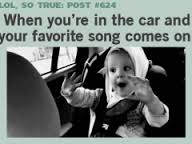
19a4839788909bdabb46838c9630e130One of my favorite things to do in traffic is defuse the tension by being that weirdo jamming out in her car, and I blame my sister for that.

My family has always been vehicularly musical; our road trips to visit relatives always involved rotating through tried and true soundtracks.  I knew the words to CamelotGodspellYou’re a Good Man Charlie Brown, etc. before I started first grade.  We still bust out Hairspray and The Best of Andrew Lloyd Webber.  So I sang in the car a lot growing up.

But car dancing didn’t really start until I taught Bird the moves to a dance associated with a particular retreat at my high school.  Although The Dance is and always will be connected to that retreat, the more I chauffeured my sister around, the more it became our thing.  If either of us was having a bad day, we’d put on The Song.  If we were bored driving home, we’d put on The Song.

Now, initially we only tended to do this while moving, so we felt like no one could see us (side note: I always toned down the moves enough to maintain full control of the vehicle at all times).  But one day, when the other drivers at a lengthy stoplight looked particularly irritable, Bird turned to me and said with that little-sister grin, “These people need Jesus.”  Before I realized what she meant, she had cranked up The Song to full volume and rolled down her window.  We were attracting glances from our neighboring cars, but the moves hadn’t started yet.  They thought we were just another couple of teenagers with really loud music.

I sighed and rolled down my window too.

When the lyrics began, we bounced in rhythm to the song and performed the moves in perfect synchronization.  The drivers across the intersection started to stare.  By the time the chorus came around, pretty much everyone was watching us.  The light turned green, and we drove on, still dancing and singing, but I definitely noticed some smiles.  Maybe they just thought we were ridiculous.  We probably looked ridiculous.

But who doesn’t love telling stories about ridiculous stuff?

Our car dance performances are not necessarily restricted to The Song or religious music.  We make up moves to Ariana Grande and Hunter Hayes.  The point is that it’s fun to get weird looks from total strangers and to make their day a bit more interesting.  (We also love to do this when we’re stopped by construction workers.)

car dance gif

And yet, for all our unbridled enthusiasm for car dancing, there has been only one spectator who dared to, as they say, get on our level.

Remember how Bird and I volunteered at VBS?  Well, one year we were given our own class to teach, a group of rambunctious 2nd and 3rd graders.  Like every other class group, our students had to learn a song.  At the concert at the end of the week, each class would perform their song, with the corresponding dance moves, for an audience of parents.

And as the teachers prompting them at the foot of the stage, Bird and I had to learn the moves too.

We were in the car on the way to St. C’s, practicing the moves and lyrics, music at full blast, when we stopped at a red light.  Since the choreography was designed for little kids, the chorus was mostly just waving your arms back and forth.  So that’s what we were doing – when we noticed the guy behind us staring.  And so was the lady next to us.

We bounced all the harder in our seats (restrained by our seatbelts, of course – safety first!) and exaggerated the ridiculous dance moves even more for our audience.  We figured we might as well.

And then, just as the light was about to turn, I glanced in the rearview mirror to see the guy behind us grinning and waving his arms back and forth in time with ours.

Well danced, sir.  Well danced.

Oh, You Don’t Want To

If I had a dollar for every time someone asked me, “And what are your plans after graduation?” I could probably pay for another year of college.

But that’s just kindly curiosity.  People are just being inquisitive, or concerned for my welfare, or even just making small talk.  I get that.  It’s what we ask as humans, isn’t it?  What are you going to be when you grow up?  What college are you going to?  What outcome are you aiming for after this Big Socially Recognized Transition?

What gets me is the number of opinions offered based on my answer, no matter what that answer is.  It’s usually, “I don’t know,” to which they reply, “Oh, you don’t want to decide anything now, you’re so young!”  If I elaborate, “Maybe grad school,” then the op-eds really start flying.

“Oh, you don’t want to get an MFA in creative writing – all you can do with that is teach.”  “Oh, you don’t want to study literature – all you can do with that is teach.”  “Oh, you don’t want to stay at the same school for your Master’s.”  “Oh, you don’t want to lose any momentum by taking a year off.”  “Oh, you don’t want to stay in school forever – work for a few years, then come back and get that degree.”

If I mention a job?

“Oh, you don’t want to stay here, publishing is much bigger in New York.”  “Oh, you don’t want to go into editing, there’s no money.”  “Oh, you don’t want to go too far from home.”  “Oh, you don’t want to get stuck in some office job, you’re much too smart for that.”  “Oh, you don’t want to waste any time, you should start networking now.”

And forget even hinting that the Engineer might come into it.

“Oh, you don’t want to make decisions based on a boyfriend.”  “Oh, you don’t want to do a long distance relationship, so few couples can handle that.”

And on and on it goes.

I’ve been calling these bits of speech opinions rather than advice.  That’s because of the four- or five-word formula at the beginning of each snippet: (oh) you don’t want to.

Don’t I, though?

Don’t I want, in some moments, to study more creative writing because it’s what I love?  Don’t I want, at times, to elbow my way into publishing regardless of the paycheck?  Don’t I want to take the person I’ve been dating for years into account?

How kind of these opinions, sensing my confusion, to tell me what I want.

I’m used to some of these.  I’ve heard them before.  “Don’t worry, lots of people change their majors,” acquaintances would say, trying to give me a way out after I told them I was majoring in creative writing.  Sounds an awful lot like, “Oh, you don’t want to do that.”  But I did, in fact, want to.  It was like Warner thinking Elle Woods couldn’t get into Harvard even after she, um, did. 

like it's hardMy chosen area of study, like Elle’s sudden decision to pursue law, has raised a few eyebrows.  It seems implausible that writing would maintain such a strong hold on me, especially in a society that places so much emphasis on money making.  I get it.  And, following up on those undergraduate doubts, it makes sense that people would make similar assumptions about my choices post-grad.

I know most of these people mean well.  They want to see me succeed, or at least not starve to death or bankrupt my parents within a year of graduation.  They probably believe that their opinions are, in fact, good advice, and I appreciate that intention.

That’s where I run into trouble.  I was raised to respect adults, to seek advice from those with more life experience than me.  So I don’t really want to just start arguing with everyone – “Oh, you don’t want to [insert action here]” “OH YES I DO COME AT ME BRO.”  But I don’t know how to politely disengage when the opinions are irrelevant to me (such as when the information is outdated or based on hearsay, or just has to do with their own worldviews that I don’t necessarily share).

And even if the advice underneath the opinion is sound, I can’t help chafing at that formula. You don’t want to.  Words carry weight in my world, and that particular phrase is like an anvil dropped from a Looney Tunes cliff.  If you know what I do and do not want – why did you ask in the first place?

Things I Used to Imagine at Night

On the nights I couldn’t seem to fall asleep, I used to employ my favorite “Imaginings.”

I used to pretend that the walls to my bedroom expanded out and out and out into a vast dormitory with rows and rows of old fashioned hospital beds, the kind with metal bars and headboards like the backs of folding chairs.  In this dormitory lived a hundred other girls, all the cliques one would expect from high school, and we were in the charge of at least one surly matron and occasionally her kinder, younger helper.  I would whisper to the other girls in the beds surrounding me until we had to hush because the matron was walking by.  The circumstances surrounding the dormitory changed.  Sometimes it was a camp for training us to be servants to the upper classes.  Sometimes it was an orphanage.  (It really depended what books I’d been reading lately.)  But that didn’t matter so much, because I only played this game at night, so I only imagined the dormitory itself.

I used to pretend that the ground below my bedroom window dropped away to a moat far below my tower, because I was a queen tucked up in her castle.  Except I was no orthodox queen – I had privateers with whom I could only meet at night for fear of tipping my hand to the sleazy ambassadors at my court.  I imagined a trusted maidservant showing the fierce pirates up to my sitting room, where we pored over battle plans until the wee hours of the night.  Sometimes I even held audiences with thieves from all over the provinces, gleaning evidence of treason by sending them to steal from my nobles.

I used to pretend that mine was the nicest room the boardinghouse had to offer, a respite from my long, secretive journey.  But I couldn’t rest just yet.  I had to listen for suspicious murmurs from the hostess downstairs, who looked at me sidelong when I paid for the room (a girl traveling alone?) and who might this very moment be disclosing my whereabouts to my pursuers – for a pretty penny, of course.

I used to pretend I was a favored servant in the palace of a sultan (particularly after I discovered the Arabian Nights), keeping tabs on court intrigue from my strategically placed room at the center of the harem.  My true loyalties shifted from night to night – sometimes I would pass on information to the sultan, and sometimes I would bide my time.

On the nights I couldn’t seem to fall asleep, I used to pretend a lot of things.  And even though I always woke up as myself again, I think the Imaginings – especially the ones I revisited over and over and over – left their mark.

Teaching Moments with Skits and Donuts

Summer always meant Vacation Bible School when I was growing up.  My mother complains says that she can still remember all six or seven verses of “the Moses Song” from my first year in VBS (“Mooooooses, floating in a basket, drifting down the river Nile.  Whoooooooo will, who will save him?  God will save this lit-tull child!”  There were hand motions and a lot of six-year-olds screaming the words.  I’m sure it was memorable indeed).  I loved this five-day opportunity to make summer as much like school as possible.  My mom probably loved the opportunity to have someone else entertain Bird and I while she ran errands.

You could only attend VBS as a student through 5th grade, so then, naturally, because I hadn’t had enough of the mind-numbingly repetitive songs and the cutesy themes (OK, I actually love the decorations in the Social Hall every year), I decided to be a volunteer for several years – until I graduated high school, actually.

One year, the Social Hall was set up to look like a Roman marketplace.  I forget the theme, but it was something about the book of Acts and the apostles trying to avoid persecution in the early Church.  There was even a cave (made of gray butcher paper and stacks of chairs) set up in the hallway for students to duck into whenever the “guards” walked by.  I worked in the abacus stall, helping kids string beads in cardboard frames (which usually took so long we didn’t have time to show them how it worked…which was fortunate, since we didn’t actually know).

I was also in a skit.

Every morning, volunteers would act out a short scene teaching one of the values related to that day’s Bible story.  I was supposed to be the kindly baker who buys a thief’s freedom from the surly guard, even though he steals bread right off my tray.  It was supposed to demonstrate forgiveness or something.

However, there were several problems with this plan.

  1. This skit took place at snack time, with a tray of actual pieces of bread/donuts to entice the kids, instead of during the morning assembly when they were all sitting quietly already. Obviously, the kids found the food more interesting than the stilted dialogue.
  2. The boy chosen to play the thief and the boy chosen to play the guard were brothers.  Identical twins, actually.  Who spoke very fast.  And got a little too into the whole “arrest” part of the skit.  Which led to…
  3. …an adult volunteer mistaking the spectacle for a real fight, coming over, physically separating the brothers, interrupting the skit to lecture them on acting their age in front of the kids.  At which point I noticed the students turning toward us with wide eyes.  Oh, sure, now they paid attention.
  4. None of us knew how seriously to take this, so we weren’t sure at what point we were supposed to break character.  I tried to explain to the adult that we were acting, but he didn’t seem to get it.
  5. The second time we performed the skit (there were 2 snack time shifts), no one had reset the gold I was supposed to use to pay off the guard, so I had to run around to the stalls looking for the plastic “gold” coins the kids used to gain entrance to their activities.  So essentially it looked like I was stealing in order to save a thief.  Oy.
  6. We were supposed to use a microphone so the kids could hear us, but passing the mic from person to person doesn’t make for a particularly realistic argument, nor does it make a lot of sense for a baker handing out trays of donuts to be holding a microphone in the other hand.

Hopefully our failure of a skit did not make or break anyone’s VBS experience.  But the important thing is, the kids learned their theme songs by the end-of-week show.

23cf52a34572d8b5011596abf9bea45a