Rejecting a Resume Builder

I might have done something dumb.  Or I might be getting the hang of self care.  The line between the two, at least for me, is occasionally hazy.

The email came from out of the blue, with Congratulations! in the subject line next to the name of the University Lit Journal.  I’ve been published in this journal before (2 stories in one issue, actually), and submitted to it multiple times…but not this past semester.  I hadn’t had time to work on anything I felt confident submitting.

Confused, I clicked.

They had accepted my piece for publication, pending revisions, and needed a bio and headshot of me by Friday.  I didn’t recognize the title of the piece they mentioned, but the girl who had emailed me knew me from previous classes and one of my other friends was the managing editor, so it probably wasn’t a case of mistaken identity.  I texted Editor Friend.

“Um, it’s the piece you wrote for Professor C’s class,” he said.  “Last spring?  Here, I’ll email it to you.”

Vague memory dawned.  It was a creative nonfiction piece about my time abroad the summer before, but I was thoroughly “meh” about how it turned out.  Professor C, though, loved it.  He had encouraged me to submit it to University Lit Journal and, when I wasn’t sure, asked if he could at least use it as an example for his creative nonfiction editors.  I said that was fine, and maybe I would revise and submit it for publication eventually.  I never got around to it – had forgotten all about it, actually.

And now University Lit Journal was offering to publish it.

I remember how it felt getting the email saying that not one but both of my previous (fiction) pieces had been accepted.  I was exhilarated.  Over the moon.  Skipping down the sidewalk (well, I do that anyway because I’m basically a 5-year-old pretending to be a college student, but you get the picture).  The meeting with the editors to go over revisions was one of the best workshopping experiences I have ever had, and I was truly proud of the product when it came out in print.

This time around, all I felt was panic.

I did not have time budgeted for this.  I did not have a spare hour to meet with the editors again, much less several afternoons to devote to revising the piece to a point where I would be happy to see it in print (again, this was not my favorite thing I’ve ever written, and though when I reread it I could see some potential, it would take a while).  And I had no desire to carve out that time.  I didn’t want to rush to a meeting where my own writing would make me feel harried and inconvenienced.  I didn’t want to spend energy that I needed for class, work, thesis, feeding myself.  I didn’t want to pick up a project that someone else had started on my behalf.

“How much would you hate me if I said no?” I texted Editor Friend.

Some people might think I’m crazy for retracting my piece.  “How much time could it really have taken?” they might cry.  “You should have jumped at the chance to get published again!  I’m sure if they wanted to print the story it would have been fine no matter how you felt about it.” And maybe, being a young almost-graduate who’s hoping to get an entire book published eventually, I should have been grateful for the chance to have another printed piece on my resume.

But I just wasn’t.  And I have enough of a sense of ownership of my writing that I wanted to be excited if I was going to have something printed.  I didn’t want it to feel – well, like this.

So I retracted my “submission” and immediately breathed a sigh of relief.  Now I could focus on the stuff I want to write – like my thesis, my manuscript, and this blog.  Maybe it wasn’t the best choice for my resume, but it was what I needed to do for myself right now.  And I’m okay with that.
Winter Break

Well, I survived my penultimate undergraduate finals week.  And now I sit in our living room across from the Christmas tree, surrounded by festive Yuletide decorations and books (seriously – we have four bursting plastic totes of Christmas books alone) and it still doesn’t feel like The Most Wonderful Time of The Year.

I’m still in that dazed letdown phase that follows a period of intense stress.  Relieved as I may be to have finished up my classes, going-going-going for two and a half weeks straight leaves me a little bewildered when I get home and there’s not as much to do.  I sit here casting around for the assignment or project I’m certain I forgot about, too used to having Something To Do hanging over my head.  The Engineer once “assigned” me coloring pages to do over the summer so I wouldn’t stress out about not having anything to stress out about.

This year, of course, I do have something to do – my thesis project.  Which is due at the end of February.  Which I’m trying not to freak out about just yet.  After all, the vacation is young.  And I do love my topic (the Arabian Nights), so the reading will probably go faster than I think it will.

But stress is not exactly conducive to the magic of Christmas.

So I suppose it couldn’t hurt to give myself a few days to breathe – and watch my favorite Christmas movies from childhood.

I am Unikitty

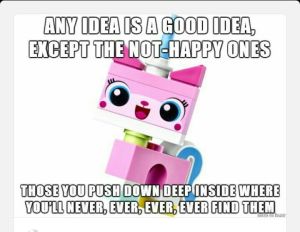
Princess Unikitty is the embodiment of positivity.  (If you don’t know who I’m talking about, drop everything and go watch/rewatch the brilliance that is The Lego Movie.  I’ll wait.)  In her beloved Cloud Cuckoo Land, Unikitty leads a life of carefree, rainbow-colored chaos, where anything goes – as long as there are no frowny faces.  Her commitment to thinking happy thoughts runs deep, even when the bad guys show up and Cloud Cuckoo Land turns less rainbow and more explosive.

bd74bcda5e98a5c9d683de753d200473Obviously, this is not the healthiest emotional habit, and it doesn’t sustain Unikitty for long.  Even as she explains the motto above, her face becomes red and angry.  Though she tries her best to suppress negativity, it’s still there, lurking just beneath the surface.  By the end of the movie, Unikitty’s anger at seeing her friends attacked overpowers her obsessively positive mindset, and she busts out some fantastic animated karate to take down her fair share of bad guys.  Plus it’s funny to watch someone go from determinedly cheerful to Hulk-smash furious in 5 seconds.

Isn’t it?

Though moviegoers recognize that Unikitty should not be dealing with her emotions this way, she still presents a fair picture of the emotional facade our society expects of us.  We place a great deal of emphasis on BE HAPPY! without sufficient focus on the methods we use to get there.  We encourage people to “let go” of negative emotions as quickly as possible, to “shake off” experiences and feelings we deem “toxic” due to their Not-Happy nature.  In effect, a lot of us really do push those thoughts “down deep inside where you’ll never, ever, ever, EVER find them.”

Unfortunately, this is not the same as feeling them.

I haven’t talked about this yet on this blog, but my own Unikitty-esque emotional habits led me into a serious struggle with depression about a year ago.  All of my emotions, Happy and Not-So-Happy, completely shut down.  I went numb.  And at first I couldn’t figure out why.  I thought depression and anxiety needed some kind of trigger, but I hadn’t had any traumatic event in my life.  Eventually, my counselor traced it back to the Really Big Conflict, as I’ve referred to it, from The Internship sophomore year.

I thought, like Elsa from Frozen, I had just let it go.

In reality, I was more like Unikitty, pretending Cloud Cuckoo Land wasn’t crashing down around my ears.  I shoved the anger, hurt, and confusion deeper and deeper down until finally the Happy Thoughts shut off too.

Something my counselor told me: You can’t feel things selectively.  You can’t just ignore negative emotions without eventually turning off the positive ones too.

As Unikitty shows us, if Not Happy Thoughts are simply shoved aside in favor of Happy Thoughts, there comes a breaking point.  Either you explode, like Unikitty, or you go numb, like I did.  Being happy All! The! Time! is all well and good if you’re just that kind of person, but I’m learning the importance of truly moving on – feeling the negative feelings and making space in your mind for them before taking that deep breath.

So maybe I won’t identify so strongly with Unikitty anymore.  But she’s a good reminder of my old habits – and why they won’t sustain me any more than they did her.


UPDATE: The original title of this post was “Unikitty is My Spirit Animal,” but having learned of that term’s importance to native peoples and cultures, I’ve decided not to use it here. I have edited the post accordingly. (2019)


Some articles about this:

Beyond Happiness: The Upside of Feeling Down from Psychology Today

Negative Emotions are Key to Well-Being from Scientific American

The Importance of Negative Emotions from Huffington Post

A Thought on Mailbox Disappointments

I like getting mail – real mail, the kind with my name lovingly written in a familiar hand with a sticker on the back holding the flap down even though it has that special glue.  One of my favorite little moments of the day is checking our mailbox, jiggling the key back and forth until it relents and lets me open our tiny metal door.  The possibility of getting mail, even a postcard, is exciting.

But more often than not, all that tumbles out are circulars with fruits and vegetables printed on newspaper, proclaiming the grocery store’s LOW, LOW PRICES.  They don’t even have coupons to clip, just advertisements listing the products for sale.

Two things bother me about these fliers:

  1. They waste paper.  Each one uses at least two sheets of newspaper, and I see the other tenants’ copies tossed carelessly in the laundry room trash (because who wants to carry it all the way across the parking lot or back to one’s apartment to recycle it?).  No one is even opening them, much less reading or using them, so why waste the materials?
  2. There is no way to stop them coming.  On unwanted email advertisements, I can hit “unsubscribe.”  On magazines, I can cancel my account or simply wait until it runs out.  But these aren’t even addressed to me – they’re sent in bulk to “Resident” at each apartment number, and probably in every other apartment complex in town.  I don’t know how to stop them, except to write some strongly worded letter to the Grocery Store Powers That Be to explain that all they’re doing is wasting paper and no one (or at least no one at this address) wants their unsolicited circulars anymore.  But what good would that do?  They’d probably forget to take us off the list, and they wouldn’t stop printing them.  At best I wouldn’t have to feel guilty for only recycling my own copy anymore.

Something I ponder frequently on my way from the laundry room to the recycling bin.

Candle Shopping with the Commodore

Some people decorate their homes visually, strewing fake leaves around for fall, some posies for springtime, and maybe a snowman or two in the winter.

The Commodore and I prefer to seasonally scent our apartment.

We go to the so-called mall just over the state border every few months to jointly purchase our new candles.  We take these shopping trips very seriously, solemnly marking them down on our Thomas Kinkade Disney calendar.  They are not without their hazards; Bath & Body Works, for starters, is in itself a dangerous place for our wallets.  Rarely do we make it out without purchasing some other item unrelated to our original goal.  But the important thing is that we never leave without at least two new candles for the season ahead.

20150902_191413Of course, there’s the sniff test.  Ranging from tried-and-trues like Fresh Linen and Sea Island Cotton to bakery-themed like Maple Pecan Waffles to cologne-ish like Black Tie, we sample pretty much everything.  We both have to like the scent.  It can’t be too sweet, or too sharp, or too fruity.  And the candles have to be the squat, heavy, three-wick ones, big enough to last at least half the season (we usually buy two).

This takes at least an hour.  Sometimes longer.

Then there was that time we dropped one of the candles while reaching for a bottle of lotion.

And then when we finally get the candles (and, if we’re being honest, a bunch of other fall/Christmas/spring/summer-y smelling stuff we don’t need) home, the hazards do not cease.  Once, I was blowing out the Sundress candle in our living room when a spark flew up and burned a hole through my shirt!

The Southern Belle later gave me a candle snuffer, “for your own safety,” as she put it.

I don’t really enjoy playing with fire (certainly not as much as the Engineer does…).  But it’s soothing to come home and let the smell of Harvest Gathering turned my mood autumnal.

Hermione Did It, Why Can’t I?

I quit something!

Normally I’m not the type of person who shouts this from the rooftops, or even whispers it across a table in a noisy coffee shop.  But in this case, having gotten overwhelmed and exhausted and emotional and angry and just generally drained on the second day of school, not to mention having three separate friends ask if there was any way I could cut back on my activities – well, something had to go.  I didn’t have many options; most of my time is taken up by classes, which qualify me as a full-time student, and work, which brings me a little money and which I also happen to love.  One of my internships is technically being taken for credit, and I only need 5 more hours to earn it.  So that left the newest internship, the one only a few days old.

I felt like a traitor, because I had pursued this opportunity myself.  I felt like a slacker because I had only completed one task (she had only given me one task, but that didn’t make me feel any better).  I felt like I always do when I have to make a perfectly legitimate excuse for bowing out of something, which is to say that I was certain my professor would think I was flaky, irresponsible, and ungrateful.  It took me a full five minutes of staring at the email I’d written her, analyzing its professionalism, to work up the guts to hit send.

And you know what I felt?

Relief.

This internship thingy had to do with organizing writers’ visits to my university campus throughout the year.  Now I didn’t have to worry about sporadic weeks of hectic stress cutting into my already packed routine, nor did I have to shove aside activities to make room for writers who may or may not have even worked in my preferred genres.

But even though I knew it was the smartest decision for me and my mental health, I still found myself justifying to all my friends who asked about it.  “Oh, yeah, I just didn’t have room for it in my schedule,” I would say, hastening to add that I was still very busy, not slacking off, not flaking out on all my other obligations.

My friend wrote a wonderful column in our university newspaper today about the problem with perfectionism, particularly in college students.  She points out that many of us strive for perfection in order to avoid shame; if we’re perfect, no one will chastise us.  The size of the failure doesn’t matter because the shame is always looming, gargantuan, disproportionate to most of the ways we fear “failing.” I thought pulling out of the internship would undo all the good work I had done in that prof’s class last semester.  Even as I happily marked down the hours I could now spend relaxing or doing, I don’t know, the homework I hadn’t had time to do, doubt poked at the back of my mind.  What if she got mad?  What if my thesis advisor thought I’d flake out on him too?  What if this was the beginning of my new slacker lifestyle?

I realize this is illogical.  The thing is, when it comes to shame and perfectionism, logic has very little to do with it.  Hermione took All The Magic Classes Ever in Harry Potter and the Prisoner of Azkaban, I tell myself.

Yes, the more reasonable part of my brain answers, but she needed a magical Time Turner to do it.

As it happens, I got an email from my professor a few days ago.  She said that my schedule did look demanding, and she hoped that I could join the group for dinner with one of the writers anyway as a thank-you for the work I had already done.

I think I can pencil that in.  But if I can’t… it’s no big deal.

Personal Bubble Encroachment

Lacking a parking pass, I have to navigate my college town’s public transport system this year, unless I feel like walking for 20 minutes in the smoke.  Interestingly, I’m finding that the bus is becoming the perfect metaphor for my experience of the first few days of school.

For one thing, the bus is packed.  All the time.  Being short, I get to either dangle from the overhead bars or lean awkwardly over another person to grab the upright handles (there’s pretty much never a seat).  So my personal space shrinks to nothingness first thing every morning.  The first week of school is also the most crowded.  It’s when everyone shows up to class to find out if attendance is mandatory.  It’s when it’s impossible to find a parking spot or a free mat at the gym because everyone is trying out the free classes and telling themselves that this semester they’ll work out every day.  It’s when people who are pretty much never on campus for the rest of the year explore every nook and cranny of the buildings they never visit and steal the regular seats of students who actually hang out in on-campus coffee shops (I may be slightly bitter about this part).

My introverted side is having trouble adjusting to this.  Unpredictable behavior from hundreds of other bodies milling around the same spaces as me is preventing me from slipping back into my School Routine as quickly and easily as I would like.  Other people are variables; I like limiting the uncontrolled variables in my life, but for the first few days of school, I can’t do that.  I can’t prevent others from invading my personal physical or mental space.

Then there’s the fact that the bus tends to be so packed that it cannot take on any more passengers, thereby precluding itself from serving its purpose… by serving its purpose.  It’s a weird cycle.  My schedule is starting to take on a similar tinge of cyclical futility.  I’m only taking 12 credits (the minimum required to be considered a full-time student), and I’m only working 10 hours a week (so far), and I’m only working out about an hour in the evenings at the rec, and I’m only doing 2 part-time internships, and I’m only starting the research on my thesis (the real work comes next semester, I keep telling myself).  But all those “onlys” add up to a lot of stuff going on in my life at once, all of it ostensibly necessary, most of it something I really do want to do.  This leaves very little room for error; procrastinating on one assignment would be like putting another bus out of commission and increasing the demand on all the others.

All my work on self care in the past year has taught me that I am most likely to drop the things that are personal first.  It’s much harder for me to bow out of obligations to others that I have agreed to fulfill than it is to tell myself that I don’t have time to work on my manuscript because I have so much homework.  But the manuscript makes me happy.  So, to drag this metaphor past the point of reason, like the bus systems, there are many demands on my time.  Now I just need to figure out a screening process to decide which passengers to allow to get on.

Which would be a lot easier to do if there weren’t so many other people throwing elbows in line for coffee.

Things I Used to Imagine at Night

On the nights I couldn’t seem to fall asleep, I used to employ my favorite “Imaginings.”

I used to pretend that the walls to my bedroom expanded out and out and out into a vast dormitory with rows and rows of old fashioned hospital beds, the kind with metal bars and headboards like the backs of folding chairs.  In this dormitory lived a hundred other girls, all the cliques one would expect from high school, and we were in the charge of at least one surly matron and occasionally her kinder, younger helper.  I would whisper to the other girls in the beds surrounding me until we had to hush because the matron was walking by.  The circumstances surrounding the dormitory changed.  Sometimes it was a camp for training us to be servants to the upper classes.  Sometimes it was an orphanage.  (It really depended what books I’d been reading lately.)  But that didn’t matter so much, because I only played this game at night, so I only imagined the dormitory itself.

I used to pretend that the ground below my bedroom window dropped away to a moat far below my tower, because I was a queen tucked up in her castle.  Except I was no orthodox queen – I had privateers with whom I could only meet at night for fear of tipping my hand to the sleazy ambassadors at my court.  I imagined a trusted maidservant showing the fierce pirates up to my sitting room, where we pored over battle plans until the wee hours of the night.  Sometimes I even held audiences with thieves from all over the provinces, gleaning evidence of treason by sending them to steal from my nobles.

I used to pretend that mine was the nicest room the boardinghouse had to offer, a respite from my long, secretive journey.  But I couldn’t rest just yet.  I had to listen for suspicious murmurs from the hostess downstairs, who looked at me sidelong when I paid for the room (a girl traveling alone?) and who might this very moment be disclosing my whereabouts to my pursuers – for a pretty penny, of course.

I used to pretend I was a favored servant in the palace of a sultan (particularly after I discovered the Arabian Nights), keeping tabs on court intrigue from my strategically placed room at the center of the harem.  My true loyalties shifted from night to night – sometimes I would pass on information to the sultan, and sometimes I would bide my time.

On the nights I couldn’t seem to fall asleep, I used to pretend a lot of things.  And even though I always woke up as myself again, I think the Imaginings – especially the ones I revisited over and over and over – left their mark.

Teaching Moments with Skits and Donuts

Summer always meant Vacation Bible School when I was growing up.  My mother complains says that she can still remember all six or seven verses of “the Moses Song” from my first year in VBS (“Mooooooses, floating in a basket, drifting down the river Nile.  Whoooooooo will, who will save him?  God will save this lit-tull child!”  There were hand motions and a lot of six-year-olds screaming the words.  I’m sure it was memorable indeed).  I loved this five-day opportunity to make summer as much like school as possible.  My mom probably loved the opportunity to have someone else entertain Bird and I while she ran errands.

You could only attend VBS as a student through 5th grade, so then, naturally, because I hadn’t had enough of the mind-numbingly repetitive songs and the cutesy themes (OK, I actually love the decorations in the Social Hall every year), I decided to be a volunteer for several years – until I graduated high school, actually.

One year, the Social Hall was set up to look like a Roman marketplace.  I forget the theme, but it was something about the book of Acts and the apostles trying to avoid persecution in the early Church.  There was even a cave (made of gray butcher paper and stacks of chairs) set up in the hallway for students to duck into whenever the “guards” walked by.  I worked in the abacus stall, helping kids string beads in cardboard frames (which usually took so long we didn’t have time to show them how it worked…which was fortunate, since we didn’t actually know).

I was also in a skit.

Every morning, volunteers would act out a short scene teaching one of the values related to that day’s Bible story.  I was supposed to be the kindly baker who buys a thief’s freedom from the surly guard, even though he steals bread right off my tray.  It was supposed to demonstrate forgiveness or something.

However, there were several problems with this plan.

  1. This skit took place at snack time, with a tray of actual pieces of bread/donuts to entice the kids, instead of during the morning assembly when they were all sitting quietly already. Obviously, the kids found the food more interesting than the stilted dialogue.
  2. The boy chosen to play the thief and the boy chosen to play the guard were brothers.  Identical twins, actually.  Who spoke very fast.  And got a little too into the whole “arrest” part of the skit.  Which led to…
  3. …an adult volunteer mistaking the spectacle for a real fight, coming over, physically separating the brothers, interrupting the skit to lecture them on acting their age in front of the kids.  At which point I noticed the students turning toward us with wide eyes.  Oh, sure, now they paid attention.
  4. None of us knew how seriously to take this, so we weren’t sure at what point we were supposed to break character.  I tried to explain to the adult that we were acting, but he didn’t seem to get it.
  5. The second time we performed the skit (there were 2 snack time shifts), no one had reset the gold I was supposed to use to pay off the guard, so I had to run around to the stalls looking for the plastic “gold” coins the kids used to gain entrance to their activities.  So essentially it looked like I was stealing in order to save a thief.  Oy.
  6. We were supposed to use a microphone so the kids could hear us, but passing the mic from person to person doesn’t make for a particularly realistic argument, nor does it make a lot of sense for a baker handing out trays of donuts to be holding a microphone in the other hand.

Hopefully our failure of a skit did not make or break anyone’s VBS experience.  But the important thing is, the kids learned their theme songs by the end-of-week show.

23cf52a34572d8b5011596abf9bea45a

My Life in Books, Part 2: Rereading Runaways

Elementary school was a time of reading and rereading for me as I discovered the escapism of my favorite books.  Several of my favorites tended toward children cleverly making their own way in the world – with a lot of detailed lists of the chores and tasks involved in their survivalist adventures.

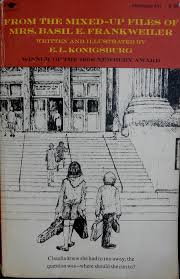
1. From the Mixed-Up Files of Mrs. Basil E. Frankweiler by E. L. Konigsburg

download (4)This was the best runaway book ever.  Claudia spends the first several chapters of the book preparing extensively for her escape from her boring suburban life – saving her tiny allowance, choosing a sibling to accompany her, selecting a destination.  Needless to say, I identified with this level of forethought; I was never one to just take off in anger.  I also loved the idea of living in a museum, having it all to myself at night, and investigating a mysterious statue.  And then, when Claudia and her brother meet Mrs. Basil E. Frankweiler?  I wanted to be her too, this little old lady living in a house full of her own personal collection of artifacts with a secretive filing system that makes sense only to her.  She was great!  But more than that, the characters seemed to understand the escapism I was seeking in the very books I read.  It wasn’t about anything specifically bad in everyday life.  It was about “coming home different,” as Claudia puts it, having something to assuage the ordinariness of home life.  It was about having a piece of adventure to hold onto while one quietly assumed one’s daily duties – precisely the reason I read.

2. Julie of the Wolves by Jean Craighead George

9780064400589_custom-0dc27ef1292bfe782c935e615a12b66a172f4107-s6-c30Like Claudia, Julie is realistic about her plans.  She wants a change of life, not just to make a scene.  Escaping a fairytale-esque step-family situation (in other words, not good), Julie ends up living on the Arctic tundra and befriending a pack of wolves.  She lives by the same rhythms of nature as the animals she follows, from lemmings to caribou to the wolves themselves.  Even though the book was full of detailed technical descriptions (e.g., Julie makes her own winter clothes out of caribou skin…after making her own needle and thread from other parts of the caribou), I pored over it as a kid.  I think I liked the idea of being self-sufficient, of filling my day with simple but useful things.  There wasn’t much dialogue, except between Julie and her imagined voices for the wolves, but it reassured me that I wasn’t the only one who imagined conversations in her head.

It was also one of my first books with a bittersweet ending; the wolves move on.  So does Julie, who goes to live with her father.  As much as I wished she could go with the wolves every time I reread the book, Julie’s sense of self was more important than a happy ending for the sake of happy endings.

3. My Side of the Mountain by Jean Craighead George…again.  Hmm.  Honestly never knew that.

JacketAnother self-sufficient, outdoorsy runaway book, I think I mainly loved this one because of the falcon.  I wasn’t planning to burn my home out of a hollow tree, or make snares, but falconry?  That’s just cool.  Minus the part about stealing a nestling.  However, in case I ever did decide to dash off to the forests of Washington (and goodness knows there are plenty to choose from), this book would have provided a wonderful manual.

This was another unsatisfying ending, at least for me.  Sam’s family shows up, agreeing that they could all “get away” from society.  But I wanted Sam to live happily ever after in his solitude.  It frustrated me that his family caught up with him, even if he was lonely.  I liked the idea of carving out a life (literally) alone somewhere.  It appealed to my introversion.  So I kept rereading it, despite the ending.

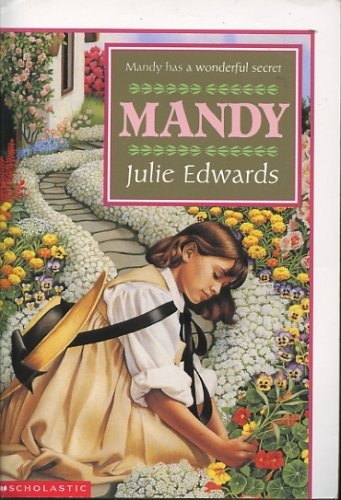
4. Mandy by Julie (Andrews) Edwards

mandyEven before I became familiar with the flawless Queen of Everything Julie Andrews, I loved this book.  I actually recommended this book to my kindergarten teacher’s daughter (she was in 4th grade at the time, so this made me very proud).  Although not exactly like the other runaways on this list, Mandy also has a secret escape from her everyday life.  Again, this appealed to my introverted side; I preferred my books, imagined experiences of my own or shared with Bird, to playdates or sports.  Mandy climbs over the orphanage wall (what young reader doesn’t love a good orphan story?) and discovers an abandoned cottage on the neighboring estate.  She begins fixing it up.  She figures out how to budget for supplies, schedules her visits when she knows no one will be looking, and works until her fingers blister.  Weirdly, I enjoyed the lists of her chores.  It was like vicarious cleaning pleasure, and as a kindergartener I wished I could find my own little house to fix up just right.  This may sound as though it goes against my feminist grain, but it was more about creating a world, a haven of one’s own (Mandy only wants something that’s hers, rather than something charity or the orphanage gives her) than just following some kind of societal norm.