Review: The Girl Who Saved the King of Sweden

*Note: This is a review of a book I have already finished and therefore contains spoilers.  Proceed with appropriate caution.

When I was younger, I went through a phase where my storytelling strategy largely consisted of taking a set of ridiculous characters, throwing them together in an absurd situation, and seeing what happened.  (This may have been triggered by my first reading of Douglas Adams’s The Hitchhiker’s Guide to the Galaxy, in which I mostly focused on the Improbability Drive and the falling whale it generated.  Also the depressed robot.) Since this was middle school, the dialogue was primarily one-liners and bad puns, and most of these plots ran out of steam after a few pages.  I was a novice writer who hadn’t yet discovered the process or genres that worked for me, so these bits and pieces of stories just sort of haunt my Documents folder and provide occasional hilarity when I rediscover them.  (My personal favorite is ambitiously entitled, “The Story of a Forwarded Letter, a Post Office Worker, and a Mailbox.”  The mailbox decides to break as many laws of physics as it can.  It’s a gem.)

Though my own attempts at this sort of thing have (mercifully) fallen by the wayside, I still have a special place in my heart for books that truly test the limits of fiction with style and absurdity, like the masterful Hitchhiker’s Guide.  In this vein, Jonas Jonasson’s The Girl Who Saved the King of Sweden is one of the most recent additions to my library, and a phenomenal read.  It’s not quite magical realism or fantasy, because it doesn’t contain anything that couldn’t physically happen in our world, but definitely includes plot points that set it apart from mere contemporary fiction (I mean, how many other books about South Africa’s nuclear arms development include the king of Sweden being kidnapped in the back of a potato truck with a bomb and a twin, neither of which officially exist?).  But I could believe every word of it, because it was the sort of book where I wanted the delightful characters (and even the irritating ones) to be real.

The eponymous girl, Nombeko, is definitely going on my list of Heroines I Want To Be When I Grow Up.  She reads everything she can get her hands on and actively seeks out knowledge about anything and everything.  This intelligence serves her well, whether it’s letting a bumbling engineer think he’s running things or negotiating a nuclear arms exchange with two agents who want to kill her.  In confrontations, she behaves exactly as I always pretended I would: shrugs and pours the bad guy some tea, thoroughly discomfiting him.  Nombeko is also snarky, compassionate, and hardworking.  She’s not perfect, of course, but her distrust of happiness is not only understandable, it made me relate to her more.  She is unwilling to make plans for the future, no matter how much she and her companions want them, until their current problem (the itty bitty matter of the bomb in the potato truck) is solved; Nombeko does not skip ahead.

Though I obviously took its representation of historical events with a grain of salt, I also enjoyed the way the book expanded my cultural horizons.  Nombeko is born in a slum in South Africa, a country I know almost nothing about.  Her adventures bring her (and the reader) into contact with such people as the prime minister, an ambassador from China, and engineers in charge of building nuclear bombs for South Africa.  The book spans some thirty years, touching on events I’ve heard of but never really learned about, and describing international relationships I had never considered before.  Recently I’ve realized how Eurocentric my reading tends to be (especially given my penchant for old English novels and the depths of academic English literature), which has left me with a disproportionate understanding of world cultures, so fiction like this might be a good way to start learning more.

I gasped, laughed, and mumbled, “Nonononono” – causing the Engineer a little concern.  An excellent book, from style to character development to plot.

5/5 stars on Goodreads


Have you read this?  Share your thoughts!  Or go read it and tell me what you think!
“They John Boy-ed Him!”

Because my mom enjoyed The Waltons, Bird and I occasionally ended up watching her DVDs of the eponymous family and their neighbors on Walton’s Mountain.  Usually it was just the early years, the ones before Ma got sent to a sanitarium for tuberculosis (because the actress quit) and Mary Ellen got married.  The later episodes just weren’t as good, according to Mom, for multiple reasons.  But one day we found The Waltons on TV and decided to watch it.  Other than the actors all looking a bit older and dealing with somewhat more dramatic issues, it seemed pretty normal.  There was a stranger living with the Waltons now, but we figured he was a cousin or something.

Except everyone kept calling him John Boy.  The narrator.

“That’s not John Boy!” we exclaimed.  Mom laughed.  Apparently the role had been recast between seasons at some point.

We couldn’t believe it.  They were just asking us to believe that this was John Boy, the aspiring writer through whose eyes we saw everything on Walton’s Mountain?  It was clearly a completely different person.

“Yeah,” said Mom, “one season he went off to fight in the War and when he came back, it was this guy!”

“Wow,” said Bird.  “War really changed him.”

Once we recovered from our laughter and agreed never to watch those later seasons again, this experience gave rise to a new phrase in our household. “John Boy” became a verb, meaning “to recast a character without warning or transition and simply ask the audience to go along with it.”

I was home on a break from school one day when Mom and Bird wanted to catch up on the season finale of a show we were currently watching.  Bird, who was texting a friend who had already seen the episode, suddenly burst out laughing at her phone.

“They replaced the brother!” she gasped.  “Oh my gosh, they John Boy-ed him!”

Sure enough, toward the end of the episode, the family entered their home to find a strange boy leaning against the kitchen table.  Gasping, they all embraced him, addressing him by the brother character’s name.  Apparently he had been at boarding school (because the old actor was in rehab or something).

“Well,” Bird deadpanned, “John Boy’s home from the War.”

My Life in Books, Part 2: Rereading Runaways

Elementary school was a time of reading and rereading for me as I discovered the escapism of my favorite books.  Several of my favorites tended toward children cleverly making their own way in the world – with a lot of detailed lists of the chores and tasks involved in their survivalist adventures.

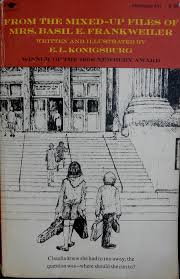
1. From the Mixed-Up Files of Mrs. Basil E. Frankweiler by E. L. Konigsburg

download (4)This was the best runaway book ever.  Claudia spends the first several chapters of the book preparing extensively for her escape from her boring suburban life – saving her tiny allowance, choosing a sibling to accompany her, selecting a destination.  Needless to say, I identified with this level of forethought; I was never one to just take off in anger.  I also loved the idea of living in a museum, having it all to myself at night, and investigating a mysterious statue.  And then, when Claudia and her brother meet Mrs. Basil E. Frankweiler?  I wanted to be her too, this little old lady living in a house full of her own personal collection of artifacts with a secretive filing system that makes sense only to her.  She was great!  But more than that, the characters seemed to understand the escapism I was seeking in the very books I read.  It wasn’t about anything specifically bad in everyday life.  It was about “coming home different,” as Claudia puts it, having something to assuage the ordinariness of home life.  It was about having a piece of adventure to hold onto while one quietly assumed one’s daily duties – precisely the reason I read.

2. Julie of the Wolves by Jean Craighead George

9780064400589_custom-0dc27ef1292bfe782c935e615a12b66a172f4107-s6-c30Like Claudia, Julie is realistic about her plans.  She wants a change of life, not just to make a scene.  Escaping a fairytale-esque step-family situation (in other words, not good), Julie ends up living on the Arctic tundra and befriending a pack of wolves.  She lives by the same rhythms of nature as the animals she follows, from lemmings to caribou to the wolves themselves.  Even though the book was full of detailed technical descriptions (e.g., Julie makes her own winter clothes out of caribou skin…after making her own needle and thread from other parts of the caribou), I pored over it as a kid.  I think I liked the idea of being self-sufficient, of filling my day with simple but useful things.  There wasn’t much dialogue, except between Julie and her imagined voices for the wolves, but it reassured me that I wasn’t the only one who imagined conversations in her head.

It was also one of my first books with a bittersweet ending; the wolves move on.  So does Julie, who goes to live with her father.  As much as I wished she could go with the wolves every time I reread the book, Julie’s sense of self was more important than a happy ending for the sake of happy endings.

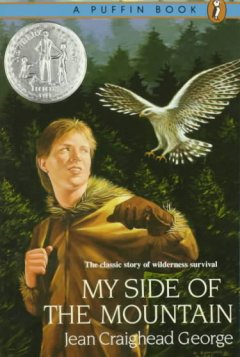
3. My Side of the Mountain by Jean Craighead George…again.  Hmm.  Honestly never knew that.

JacketAnother self-sufficient, outdoorsy runaway book, I think I mainly loved this one because of the falcon.  I wasn’t planning to burn my home out of a hollow tree, or make snares, but falconry?  That’s just cool.  Minus the part about stealing a nestling.  However, in case I ever did decide to dash off to the forests of Washington (and goodness knows there are plenty to choose from), this book would have provided a wonderful manual.

This was another unsatisfying ending, at least for me.  Sam’s family shows up, agreeing that they could all “get away” from society.  But I wanted Sam to live happily ever after in his solitude.  It frustrated me that his family caught up with him, even if he was lonely.  I liked the idea of carving out a life (literally) alone somewhere.  It appealed to my introversion.  So I kept rereading it, despite the ending.

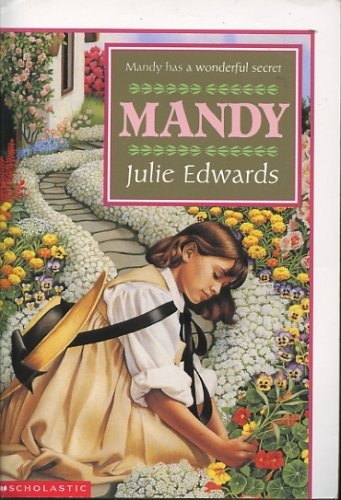
4. Mandy by Julie (Andrews) Edwards

mandyEven before I became familiar with the flawless Queen of Everything Julie Andrews, I loved this book.  I actually recommended this book to my kindergarten teacher’s daughter (she was in 4th grade at the time, so this made me very proud).  Although not exactly like the other runaways on this list, Mandy also has a secret escape from her everyday life.  Again, this appealed to my introverted side; I preferred my books, imagined experiences of my own or shared with Bird, to playdates or sports.  Mandy climbs over the orphanage wall (what young reader doesn’t love a good orphan story?) and discovers an abandoned cottage on the neighboring estate.  She begins fixing it up.  She figures out how to budget for supplies, schedules her visits when she knows no one will be looking, and works until her fingers blister.  Weirdly, I enjoyed the lists of her chores.  It was like vicarious cleaning pleasure, and as a kindergartener I wished I could find my own little house to fix up just right.  This may sound as though it goes against my feminist grain, but it was more about creating a world, a haven of one’s own (Mandy only wants something that’s hers, rather than something charity or the orphanage gives her) than just following some kind of societal norm.

Manuscript

the original text of an author’s work, handwritten or now usually typed,that is submitted to a publisher
writing, as distinguished from print
I attended my first writers’ conference a few weeks ago.  For the first time in my life, I was surrounded by people who talked and thought about writing and books and reading and storytelling as much as I do – and they didn’t look at me like I’d grown a second head when I described my writing process or gushed about the diction in my favorite novels.
Being surrounded by likeminded individuals, I’m learning, is very affirming.
While there, I had the opportunity to pitch my idea for a novel to editors and agents from publishers of all shapes and sizes all over the country.  It was a rather terrifying process, but I connected with an editor and an agent who both seemed genuinely interested in reading my story and asked to see it.  Suddenly, it all felt real – this idea that I would be a writer, that I was always writing anyway, was suddenly made more corporeal by the idea that someone (outside friends and family who kind of have to like whatever I do anyway) actually wants to read my story.
!!!!!!!!!!!!!!!!
So now I’m frantically working to get my story into presentable shape so I can send it off.  Except they don’t call it a story, like I’ve been calling all my bits and pieces and fragments all these years.  It’s a manuscript (or at least, it will be).
Originating from medieval Latin for “written by hand,” manuscript to me suggests a sheaf of slightly crinkled papers covered in looping cursive and a few artistically placed ink blots, gently puffing out dust motes from the garret in which their creator scribbled down her ideas in a feverish haze.  It seems the kind of thing Jo March brought to her publishers, tied up with a ribbon.  My typed, double-spaced, Times New Roman pages seem too clean, too modern to merit such a literary term.
And yet, the painstaking work that goes into uncovering the precise language a story demands, the hours spent getting to know the characters, the effort taken to give a scene just the right effect, the feeling of giving up part of myself when I let someone else act as a beta reader (usually Bird, who is supportive but not blindly so)…yes, this is writing of my own hand, transcribed from imagination by my rapidly tapping fingers on the keyboard.  It’s the original text of my own work.
Now I just have to find a garret to hole up in until I finish.

The Many Layers of Lizzie Bennet

Yesterday I received my very own copy of The Secret Diary of Lizzie Bennet. And today I finished reading it. All 377 pages of it.

I have loved the Lizzie Bennet Diaries ever since my freshman year of college (NOTE: If you have not watched them, stop reading right now, go to YouTube, and watch them. All of them. Right now.), and have only grown to love them more as I rewatched them over and over again (occasionally I find myself just binge-watching all 100 episodes plus the related secondary arcs in a matter of 48 hours. Much like reading the book. But I digress). At first I simply enjoyed watching the creativity of updating Jane Austen’s classic novel and translating it into modern media. Then, on the second or third go-round, I started to think about the online community Lizzie was creating. So I started scrolling through the comments section below the videos, reading the conversations people were having, the reactions. I even commented a few times.

I was absurdly proud when my comment became the top one on Episode 18.

Then came the watch-through at the beginning of my junior year of college, right when all the undergrad stuff starts to give way to the “better plan something for after graduation in two years” pressure. Even though Lizzie’s story takes place in grad school, the connection between her fear of departing the Bubble of Academia and mine had strengthened. I was staring down similar questions of what I wanted to do with my life, battling similar tendencies toward prejudice, struggling with a similar workload.

Reading the book has added another layer to my experience of the LBD as a whole. Besides adding new twists to the plotlines and revealing specific details in settings we never saw on camera, the book even better translated Lizzie’s inner turmoil, not only over her sister’s love life, but over what to put online, what content she wanted to generate, what she wanted to contribute to the world.

And damn. As much as she procrastinated some of those decisions, girl got stuff done.

For the past few weeks, I’ve been…stuck.  I might elaborate a bit in future posts, but for now suffice it to say that I was sorely lacking in motivation to even go to class, let alone answer my professors’ questions about whether or not I’m considering grad school or what internships I’m pursuing for this summer.  All I ever wanted to say to them was, “I don’t even have a complete resume right now.  Leave me alone.”

As sappy as it might sound, reading about Lizzie Bennet’s success in pursuing what she loved, both familial and career-wise, helped jolt me at least a few inches back toward reality.  I’m going to make the most of this vicariously earned productivity – and not just by making blog posts.  Hopefully.

Honestly, that’s what amazes me about multimedia storytelling these days.  I adore books; they were the background to my childhood, and will always hold a special place in my heart.  But there’s a big difference between reading something and sitting down a week later around a cheese plate in someone’s family room to talk for a few hours, and being able to contribute to an immediate and growing shared forum. It’s fascinating to watch the communities that spring up around projects like LBD and Vlogbrothers.  Even SnarkSquad, the blog that got me re-interested in blogging and online content, has its own little band of followers.

Membership in such communities around multimedia projects extends well past mere Internet fame; because the narrative originates in a platform that allows immediate sharing of reactions to the content, a viewer also becomes a contributor in real time.  Passivity becomes a choice rather than a fact of the medium.

And discussion of the content is no longer confined to whoever else is in the living room while you control the remote.  Worldwide critical discussions take place every day around every type of narrative possible.  It’s beautiful and intriguing to watch as the swirling conversations on Tumblr connect with the YouTube comments which intertwine with the Facebook and Twitter threads.  We get to watch and read and listen to these amazing creative things – and then we get to join in.

Over here in my own little narratively nerdy corner of the Internet, I’ll be trying not to take that for granted.