Enjoy

to experience with joy; to take pleasure in

For someone whose brain rarely shuts up, I have a tough time with mindfulness.  The concept of being present, of taking in each thing as it comes instead of constantly planning and worrying, makes plenty of sense when I look at it objectively.  Executing the practice, on the other hand…

Sometimes it seems as though there’s too much space in my mind devoted to doubts, worries, rants, complaints, and failures.  My memories love to dredge up classic reruns of my most embarrassing moments, so much so that I’ll be squirming in my seat at the thought of something that happened years ago.  I may not be the best at this “adult” thing, but I feel like blurting out something awkward in 5th grade shouldn’t still bother me so much.  (Then again, if any of you have found a way to truly get over your middle school embarrassments, for the love of all that is good in this world, TELL ME YOUR WAYS.)

Some people call this “negative self-talk.”  These same people tell me of something called “self-compassion,” which is, again, a concept that sounds grand but is tricky to implement.  My thoughts have worn ruts of worry in my synapses.  I don’t have the time, it seems, to stop and breathe.

That’s why I’ve been thinking about the word “enjoy” lately.  It caught me while I was rereading Madeleine L’Engle’s excellent memoir A Circle of Quiet, where she spends several early chapters discussing the concept of joy.  She talks about existing, about resting, in that joy she feels in a simple moment – and she talks, too, about how rare it is for her to quiet herself enough to do that.  It comforts me that I am not the only one who has difficulty simply being.

The word “enjoy” originally came from Middle English for “to make joyful,” or Old French for “to give joy to.”  Joy, it seems to me, is a much more serious business than mere contentment or happiness.  “Happy” has something of a giddiness to it.  “Joy” has weight.  It leaves an imprint.  But that mark, that gentle, comforting weight like a hand on our shoulder, only comes when we let ourselves “enjoy,” when we let ourselves exist in the moment.  In joy.

So I’ve been trying to pay attention to the joyful moments, to the little things that allow me to exist “in joy” for a second or two, and to rest, rather than squirm, in the unusual quiet of my brain.

I started off easy – it’s all too natural for me to enjoy the first sip of coffee in the morning, or a well-written sentence that makes me close the book and stare off into space for a moment to absorb the craft of the words, or a monarch butterfly flashing across my path, or a fuzzy puppy rolling over and begging to be petted.

But it’s other things too.  It’s realizing that it doesn’t bother me to eat lunch alone in a strange town because I know I’m here for an internship that provides me with work I truly love doing.  It’s one-word texts from the Engineer.  It’s establishing witty rapport almost immediately with my new coworkers.  And it’s stepping outside the trailer in the evening and letting comfort seep down from a starry dome, even though it’s cold, even though I should go to sleep, because it feels good just to be – just to exist in joy.

Now I’m curious – what do you enjoy?

Water Water Everywhere

So I’m on an island.

Not a tropical island, the kind that shows up in clip art with palm trees and sand and maybe a coconut or two even though I’m not even sure coconuts grow on palm trees and those are the only vegetation visible in these stereotypical island illustrations.

I am on an island between the Strait of Juan de Fuca and the Puget Sound, one of those bumpy places on the map whose outline looks like the leftover dough after the cookies have been cut out.  I have a bed in a trailer in the driveway of the Engineer’s grandparents.  I have a one-cup coffee maker, and yogurt for breakfast, and my GRE prep book, and my laptop, and most of my dresses hanging from a tension rod in the shower because it’s summer, and I like to wear dresses, perhaps too many, though I sent some home with my mom because she said there was no way they would all fit.

I am on this island for the latest Big Exciting Thing: my internship with a company that actually does what I hope to end up doing (editing and publishing).  I haven’t actually gone to work yet, but I’m quite excited.  At the moment, I’m in an armchair in the public library, gazing out at the water (that’s the nice thing about an island – drive long enough and you find a spectacular ocean view!).  Now I think I’ll wander down to the wharf to try out one of the coffee shops, since I anticipate wanting to find a hang-out where I can caffeinate and read comfortably for what may be hours on end.

Yesterday I saw the most charming little bookshop.

I can smell the saltwater when I open the windows in my cozy little trailer.

I think I will be happy here.

That Time I Almost Punched a Sexist

As a freshman in high school, I was the type of girl who enjoyed stepping menacingly toward my male friends when they said something that offended me, even though we all knew I would never actually lay a finger on them. Besides, I was too short to be scary. (I’m still short, but I sometimes pride myself on the ability to be menacing when necessary.)  Violence was not, in fact, my go-to problem solving strategy.

Still, I knew I would have a hard time not slapping the smirk off P.B.’s face the minute I met him.

calvin and susie bug

We were in English, one of the few classes in which I was not on the honors track because my high school did not have an honors English class for freshmen.  While by junior year I could happily spend 75% of the day away from those students to whom I was merely a nerd who took school too seriously, freshman English required me to rub shoulders with people who still stopped at the end of every line, whether or not there was a period, when reading aloud.  (The teacher also frequently asked my help spelling things on the board, which didn’t exactly inspire confidence in his pedantic abilities, but I digress.)

I don’t remember how it started – the teacher must have asked us to have a conversation about something in the lesson with a partner nearby – but somehow I found myself talking to P.B., who was twisted around from his seat in front of me and was draping one lanky arm across my open copy of Lord of the Flies.  Glaring, I slid it out from under him so he wouldn’t wrinkle the page.  Whatever we were originally supposed to be discussing, the conversation turned to grades and schedules.  He bragged that he had a B+ in the class, to which I nodded approval.

I was less approving of his shock at the fact that I had a high A.  He began quizzing me on my grades and how many honors classes I was in.  At first I didn’t care, but it quickly grew satisfying to see him attempting to process the idea that I was probably beating him in the GPA department.

“Well, I must have a higher grade than you in math,” he said finally, leaning back against the metal bar connecting his chair to his desk.  (His arm was still across my desk.)

I rolled my eyes.  “I’m in Geometry Honors and you’re in Algebra,” I said, trying to point out that he couldn’t really compare our grades there because we were studying entirely different things.

He smirked patronizingly.  “I’m still probably better than you.”

“Why would you assume that?”

“Because guys are better at it than girls.  You just aren’t smart enough to think that way.”  The most remarkable thing, now that I look back on it, is his tone – there was no malice.  He was simply stating something of which he was utterly convinced.

“That…is..the most sexist thing I’ve ever heard,” I said, trying to control my tone.

He shrugged.  “It’s true.”

Almost unconsciously, as though independent from my body, my left hand curled into a fist and my elbow drew back as though I was about to fire an arrow from a bow.  I had never punched anyone before, but P.B. was about to be the lucky first.

Until my teacher materialized at my side and asked, “How’s the conversation going here?” a little too brightly, having seen it all unfold from across the room.  I honestly don’t remember the rest of that class, although I do remember that when we next came to English the teacher announced we had new seats and P.B. was diagonally opposite me, literally as far away as the teacher could physically place us.  This was probably a wise move.

This incident, one of my earliest face-to-face encounters with the concept of sexism, sticks with me for several reasons.

One, I had never realized that people could be so certain of something that I found so obviously wrong.  P.B. was jeering at me, but he was just as convinced that females were inferior as I was convinced that the earth is round.  We had discussed discrimination and assumptions about women’s abilities in my family before (see: weirdest dinner conversations ever), but it hadn’t really dawned on me that there were people – people in my day-to-day world, no less – who actually thought of me that way. It was suddenly and newly personal.

Two, because it was one of the first times I had ever come right up against sexism, I had no idea how to react.  I was angry, but I didn’t have the vocabulary to correct him or explain to him why his certainty had no actual support.  (Sometimes I wonder, though, if one good punch would have convinced him much faster that girls are just as good as boys…kidding, kidding!  Mostly.)  And I realized how much I – and all the girls around me – needed to develop that vocabulary.

Stuff To Do This Summer

Pray.

Bible study with Bird.

Study for the GRE.

Enjoy and learn from my new internship.

Do DuoLingo or something to keep up my extremely rusty Spanish.

Maybe learn some basic Italian while I’m at it.

Keep up an exercise routine.

Keep up this blog.

Work on some of my own stories.

Get back in touch with old friends.

Go to a friend’s wedding.

Start research for my thesis.

Speaking of which, should probably get that proposal revised and turned in.

Visit the Engineer.

Visit the Southern Belle.

Learn my way around my new town, including finding a bookshop and coffee place to frequent in my down time.

Start journaling again.

Put on sunscreen.

Drink a lot of coffee.

Be happy.

Hell Hath No Fury Like a Perfectionist in a Group Project

I have trust issues.  More specifically, I have trust issues when it comes to group projects.

You see, the trouble with group projects is that in my formative years, everyone in the group got the same grade regardless of the amount of work they had put in.  I learned very quickly that if I let most of my classmates half-ass our posterboards and say “I don’t care” the whole time, the end result would be a posterboard I was embarrassed to stand in front of while we presented to the class.

So I took over.  The way 5th grade me saw it, they didn’t want to do the work, and I didn’t want them to do the work, so everyone was happier if I just made everything just the way I wanted it.

But then high school came, and even though I still ended up taking over most of my group projects, I had a new weapon at my disposal: evaluations.  Secondary education, apparently, was not quite so idealistic in its assumptions of how children would divide the labor.  These new teachers knew perfectly well that the nerds and perfectionists (and believe me, I stand proudly at the intersection of that Nerdy Perfectionist Venn Diagram) would end up doing all the work if the slackers had no carrot or stick to move them along.  Suddenly I had power; instead of being the group workhorse or overachiever, I was the taskmaster.  With a gleam in my eye that was the precursor to my Soul Burning Glare, I quietly but significantly jotted down notes of who was and was not working during group meetings.

I was usually a benevolent dictator, or at least I tried to be.  After all, I only wanted what the rest of the group wanted: to get a good grade.  But it was often difficult not to wish that I could just do the whole thing myself and only have to worry about my own time management.

Of course, group projects have taught me some valuable skills, though probably not the teamwork and collaboration my teachers hoped I would get out of them.  More accurately, I learned that most of the other kids actually didn’t mind pitching in but were afraid to try to wrest control from me.  (To be fair, I probably wouldn’t have responded well to an outright coup.)  I learned to delegate, to reluctantly relinquish little bits of the project, and to pretend to be okay with relying on other people.  And I found allies in unexpected places.

Sophomore year of high school, we had to draw a map of the Odyssey, including quotes from the book.  My group sat around on the floor of the hallway, staring at the markers and the terrifying expanse of blank butcher paper in the center of our circle.  They all claimed not to have a mental picture of Odysseus’ journey.  Conscious by then of my domineering tendencies, I had been trying to bite my tongue, but at that I pulled out a pencil and started sketching the islands as I had envisioned them the whole time we’d been reading.  After I placed the islands, my group members followed behind with the markers to color them in and add some scenery.  That night I went home and compiled a list of short quotes we could write next to each island and showed up to the next class ready to write and draw, feeling as though I hadn’t done much.  At the end of that meeting, as we divvied up the remaining labor for the weekend, I volunteered to take the poster home and finish it.

“I think,” a boy named Will said, looking at the printed list of quotations in my eager hands, “that since Grace has done pretty much everything so far, she shouldn’t have to do anything else.”  A murmur of agreement ran through the group, and I blushed down at the poster.  He didn’t say it meanly, as though he thought I had steamrolled all over everybody.  He simply acknowledged my work and kindly pointed out that they could take it from there.  It was a nice moment.

But then I had to keep six people on task for an entire semester-long government project senior year, and my exasperation with group projects was cemented.

I understand that they have their place.  Really, I do.  I’ve learned from having to deal work with other students and communicate with them.  But college is so busy already that I would rather not have to track down five other people and twenty disparate pieces of the project just so we can pass the class.

As for the basic argument that we’ll need to work in groups in our careers?  Just one more reason I want to be a happily introverted writer tucked away in my garret.

Everyone Thinks I’m Graduating

“Wait. You’re going to be here next year?”

I had just told one of my coworkers about my plans to apply for a slightly elevated position (think Supervising Student Employee instead of just Student Employee) at our job next semester when utter confusion clouded her face.

“Ye-es…” I said, equally confused.  “I’m a junior.”

“Oh my God!  We all totally thought you were leaving this year!”

My boss had the same reaction when I popped my head into her office to ask when the applications would be out.  I mean, she seemed excited that I’ll be sticking around for another year, but she definitely thought I was leaving in May.

When I asked another coworker, she said, “Yeahh, I thought you were a junior because you’re the same year as the Commodore, but everyone else seemed so sure you were graduating.”

This is all very strange to me.  First off, it’s always weird to find out other people discuss you when you’re not around.  I suppose the fact that I’m well-known at work bodes well for my plan to take on more responsibility there.  And it’s not like they’re all rooting for me to leave.  It’s just strange to think of myself being referred to in the third person in my own absence, a little like realizing that all the people you pass by briefly and think of as extras or one-dimensional characters in your own life in fact have their own three-dimensional lives in which you are merely an extra passing through the background too.

Secondly, this idea of me graduating anytime soon, though terrifying, is quickly becoming a theme in people’s assumptions.  “You’re a senior, right?”  Um, no.  “But you’re graduating early, right?”  Again, no.  “Are you gonna get an internship for next year?”  Maybe I just give off Almost Done With College vibes or something.  Or I just appear incredibly mature for someone who is only in her third year (yeah, right).  Or somehow, because I was always the Smart Girl, finishing school in the traditional time span of four whole years seems too long, too commonplace to people looking in on my life.  But I’m happy here.  I’m good at this.  So yes, I will be here another year, which puts me graduating right on time – for me.

Conversation About Conversation

I like to joke that typical dinner conversation at my house delves into the Big Questions, discussing Life, The Universe, and Everything.  It’s true that what Bird and I consider normal mealtime chat includes the stigma on mental illness, the treatment of women throughout history, the state of the education system in the US, and so on.  I never knew this kind of thing wasn’t necessarily typical until I began having dinner at friends’ houses and learned that when they talked about their day, they stopped there.  They literally just talked about their day, and maybe what they had planned for the next day, or the weekend, and maybe a funny story from last summer when they all went inner tubing and the youngest dropped her sunglasses and cried.  I mean, we had those conversations too.  (Believe me, there are plenty of stories we love to bring up at the slightest provocation.  Remind me to tell you about the time Dad got a speeding ticket.)

But we also enjoyed going off on extended tangents about abstractions and Important Concepts while our dinners cooled in front of us.

And I am so grateful for that.

My family’s tendency to engage in abnormally esoteric dialogue gave me a foundation for extracting themes from the literature I read in All the English Classes Ever.  It gave me a vocabulary for identifying abstract concepts.  It gave me practice for listening to others and having a Real Discussion as opposed to a shouting match.  And it gave me the mindset that led me to the Writing Center.

My university’s Writing Center became my haven during a semester when things were pretty rough for me.  I found an affirmative place where like-minded people weren’t afraid to have conversations about their enthusiasm for language.  Even though the required job trainings take chunks of valuable Netflix  time out of my evenings, I love them.  I love getting to talk about the importance of body language while working with a student and our desire to change the campus perception of us as a personification of spell check.  It almost feels like spending an evening at home again.

The environment that encourages these conversations is slowly helping me figure out what I want to do with my life.  Not the answer to the perpetual question of What I Want To Do, as in a job, but the values I believe the world needs to see more often and how those should influence my own choices.  If I never talked with anyone about these things, I would probably be facing those looming Life Decisions with even more paralyzing terror than I currently have.  As it is, I am buoyed by the knowledge that somewhere out there are other people who like to have conversations about conversation.

others

Libraries I Have Known

The Southern Belle was dubious when I strode toward the checkout station with a baker’s dozen of books, most of them hardcover, in my arms. She added her own modest three novels to the stack, then proposed using the plastic bags provided by the library to transport our literary loot out to my car.

I scoffed.

“Nearly all of these are hardcover – they’ll tear holes right through those bags,” I told her, starting to gather the scanned books back into my arms.  The Southern Belle sighed, and because she is a fabulous friend, grabbed half the stack for herself so I didn’t actually have to carry them all.  I would have, though.  I’ve done it before.

0973c21b26cff02884470cb1f045bef5

To me, a library trip is only successful when it results in such a large haul of reading material that I can’t quite open the front door when I get home.  I’ve developed this habit from childhood; ever since I got my first library card in kindergarten, I would toddle up to the counter with a stack of books tucked under my chin, my fingers barely gripping the bottom of the pile as I propped it against my torso.  The librarians would lean down and peer at me as I tried to shove my heap up and over the counter for them to scan.  “Are you really going to read all those?” they would ask, half to me, half to my mother, who stood by nodding.

“Oh yes, she will,” my mother said.

That was in the first library I knew, the brick one with the lane of trees out front and Reading Riley, the brass turtle, on his pedestal just outside the door.  That was the library where, seized by one of those fevered obsessions that strikes third-graders, I checked out nearly every book available on lemurs and wrote a report.  For fun.  During the summer.

That library is gone now, torn down and the spot where it stood filled in with mountains of dirt.  The city promised a new library in that same spot, a bigger, better one.  A year, two at the most, they said.

It took five.

During those five years, the temporary library was crammed into a space that used to house an auto parts store.  Many of the books, including some of my favorites, were now in storage elsewhere.  I had to request a lot of things from other branches.  The librarians who had watched me grow up shook their heads whenever I asked about a beloved volume.  Probably in a box somewhere, they said.

Now we have a new library, with floor to ceiling windows and self checkout stations and conference rooms for readings and signings and book clubs.  There’s a job search area with resources for unemployed people, a teen area, a kids area.

I think the kids section might be the only one without computers.

Of course I miss the library of my childhood, the one with brick walls and a hushed atmosphere and a counter that allowed me to get to know the people who worked there.  But at school, what I’m really homesick for are those teetering, heavy stacks of pleasure and leisure reading.  Spring break means getting to pile books up to my chin, crash through the door, settle in, and devour half the stack in one afternoon.  And that, to me, is home.

Productive Procrastination

College

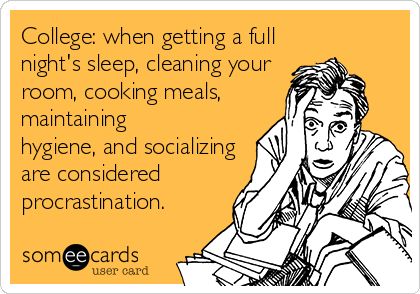
Productivity is weird, particularly in college.  One can be domestically productive, or scholastically productive, or literarily productive (I may have made that one up), but it seems that one cannot be productive in all these areas at once.

This morning, in a burst of motivated energy, I did three loads of laundry and put them all away, changed my sheets from flannel to cotton because it’s finally above 50 degrees, did the dishes, tidied the kitchen and living room, read my Shakespeare assignment for Monday, found articles for my Coleridge presentation on Tuesday, caught up on Doctor Who recaps on my favorite blog, read a great deal of my leisure book, and planned out my homework schedule for tomorrow.

Unfortunately, this leaves me with a presentation and an HTML project to finish, two papers to start, a five page rough draft of a creative nonfiction piece to write, meals to plan, and grocery shopping to do, not to mention preliminary research to do for my thesis project.  So although I feel like the day was well-spent, academically speaking my to-do list has not shortened by much.

The Commodore pointed out that I’m laying the groundwork for the homework I have to tomorrow, since I found sources for the projects I have to finish this week.  And now that some domestic chores are out of the way, I’ll have the uninterrupted time I need to delve into the more time-intensive tasks I left for tomorrow.

At least, that’s how I keep rationalizing it to myself.  Yes, I was productive today…just…not with homework.  But in college, little else tends to matter.  So tomorrow should be…busy.

“This is Mother Land”

One of my grandma’s friends, Sally, was going through her old papers recently when she came across a scrap from September, 1998.  Apparently when I was little, my nana would take me with her to visit Sally, a retired schoolteacher who was fascinated by the stories that came pouring out of this jabbering toddler.  One in particular evidently demanded recording:

This is Mother Land – It’s a place for mothers with fevers. Would you like to have a seat on our bench? Rule number one is – I’m going to explain to you about mothers with fevers and babies with colds.  This baby has no cold.  This baby has a cold that is SO bad – This is a big sneeze – a really big sneeze.  The mother has a fever.  It started in her head.  The arrows show where the fever goes.  It went down to her belly button.  It went down her arms to her hands.  It went all the way down to her toes.

Age 4, 9/22/98

This subject matter probably had to do with the fact that my baby sister had been born not eight months previously.  I don’t know why I never explained what Rule Number One was, but I’m curious as to what my four-year-old self would have said!  Similarly, I kind of want to know if the bench was a real piece of furniture or just a figment of my overactive imagination, and if I was actually drawing arrows on some kind of diagram while I said all this.

My parents always said I was telling stories my entire life. As my mom liked to tell people, I didn’t start speaking in sentences; I started speaking in paragraphs.  I chuckled along, happy that my parents didn’t mind that I wanted to major in creative writing and work as a writer.  But to see it written down is to see proof that I really have been doing this since I could talk. Sally’s beautiful handwriting, left over from a day when penmanship was as important in schools as the Pythagorean Theorem, captures my four-year-old imagination’s ramblings, setting my sentences down far more coherently than I probably said them at the time.  Even though I can’t quite make out the narrative arc of this particular “story,” I can see the roots of one of my favorite fiction-building tendencies: fantasizing and describing new places and cultures, building a whole “land” out of thin air.  This is where the magic begins for me, the words that will spill over into every part of the rest of my life: a four-year-old jabbering away.