Review: The Girl Who Saved the King of Sweden

*Note: This is a review of a book I have already finished and therefore contains spoilers.  Proceed with appropriate caution.

When I was younger, I went through a phase where my storytelling strategy largely consisted of taking a set of ridiculous characters, throwing them together in an absurd situation, and seeing what happened.  (This may have been triggered by my first reading of Douglas Adams’s The Hitchhiker’s Guide to the Galaxy, in which I mostly focused on the Improbability Drive and the falling whale it generated.  Also the depressed robot.) Since this was middle school, the dialogue was primarily one-liners and bad puns, and most of these plots ran out of steam after a few pages.  I was a novice writer who hadn’t yet discovered the process or genres that worked for me, so these bits and pieces of stories just sort of haunt my Documents folder and provide occasional hilarity when I rediscover them.  (My personal favorite is ambitiously entitled, “The Story of a Forwarded Letter, a Post Office Worker, and a Mailbox.”  The mailbox decides to break as many laws of physics as it can.  It’s a gem.)

Though my own attempts at this sort of thing have (mercifully) fallen by the wayside, I still have a special place in my heart for books that truly test the limits of fiction with style and absurdity, like the masterful Hitchhiker’s Guide.  In this vein, Jonas Jonasson’s The Girl Who Saved the King of Sweden is one of the most recent additions to my library, and a phenomenal read.  It’s not quite magical realism or fantasy, because it doesn’t contain anything that couldn’t physically happen in our world, but definitely includes plot points that set it apart from mere contemporary fiction (I mean, how many other books about South Africa’s nuclear arms development include the king of Sweden being kidnapped in the back of a potato truck with a bomb and a twin, neither of which officially exist?).  But I could believe every word of it, because it was the sort of book where I wanted the delightful characters (and even the irritating ones) to be real.

The eponymous girl, Nombeko, is definitely going on my list of Heroines I Want To Be When I Grow Up.  She reads everything she can get her hands on and actively seeks out knowledge about anything and everything.  This intelligence serves her well, whether it’s letting a bumbling engineer think he’s running things or negotiating a nuclear arms exchange with two agents who want to kill her.  In confrontations, she behaves exactly as I always pretended I would: shrugs and pours the bad guy some tea, thoroughly discomfiting him.  Nombeko is also snarky, compassionate, and hardworking.  She’s not perfect, of course, but her distrust of happiness is not only understandable, it made me relate to her more.  She is unwilling to make plans for the future, no matter how much she and her companions want them, until their current problem (the itty bitty matter of the bomb in the potato truck) is solved; Nombeko does not skip ahead.

Though I obviously took its representation of historical events with a grain of salt, I also enjoyed the way the book expanded my cultural horizons.  Nombeko is born in a slum in South Africa, a country I know almost nothing about.  Her adventures bring her (and the reader) into contact with such people as the prime minister, an ambassador from China, and engineers in charge of building nuclear bombs for South Africa.  The book spans some thirty years, touching on events I’ve heard of but never really learned about, and describing international relationships I had never considered before.  Recently I’ve realized how Eurocentric my reading tends to be (especially given my penchant for old English novels and the depths of academic English literature), which has left me with a disproportionate understanding of world cultures, so fiction like this might be a good way to start learning more.

I gasped, laughed, and mumbled, “Nonononono” – causing the Engineer a little concern.  An excellent book, from style to character development to plot.

5/5 stars on Goodreads


Have you read this?  Share your thoughts!  Or go read it and tell me what you think!
The Blessings Jar

I can’t work in clutter.  My room, in the upheaval and un-routine-ness that accompanies a new semester, had been in an Uneasy State of Chaos for a while, and I was sick of it.  So, working counterclockwise around my room from the door, I Cleaned – and yes, the capital is warranted, because it was no mere 10-second tidying up.  I dusted and organized and rearranged and adjusted until everything fit Just So.

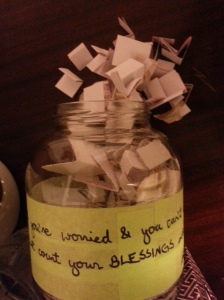
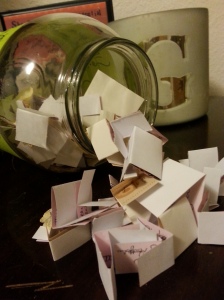
I was on a roll until I got to my nightstand.  One of the Random Things that had come to rest in obscurity right next to my bed was a pickle jar with the label peeled off and many slips of multicolored paper inside.

2016-01-19 19.37.17

My Blessings Jar.

I’d forgotten about it, failed to keep up the habit, since last year when Bird gave me the idea (which I think she got from Pinterest).  As I swiped the dust rag over it, I thought now might be a good time to empty it, start fresh, swear to myself that I would chronicle at least One Good Thing each night from now on.  Settling criss-cross-applesauce on the floor, I poured out the tiny scraps and began to read.  Some made me chuckle, like liquid dishwasher soap from when the Commodore and I finally ran out of that awful powdered stuff and bought a gallon of the liquid we preferred.

Some, like Bird’s smile when she saw me in the chapel after her retreat, made me cry.

It amazes me, sometimes, the magnitude of things that can be tethered in tiny characters inked on paper.  The moments I had found worth recording were instances of love, support, and shared strength from my parents, my sister, the Commodore, the Southern Belle, the Engineer and his family, my friends from church, and my coworkers.  All the people in my life had contributed to these scribbly bits of paper showing me how many families I have looking out for me.

So often it’s easier to remember the one bad thing that happened at the end of an evening, or late in the afternoon, and let it erase all the silliness and contentment of the morning and lunchtime.  A whole day can be colored by just one negative thing.  But when I force myself to think of just One Good Thing, it’s funny how more Good Things start to come out of the shadows, shyly raising a hand to say, “Remember me?  You didn’t have such a bad day after all.”

I tucked the old blessings away in a box and set the empty, hopeful jar on my freshly dusted nightstand.

I think this is a habit worth attempting again.2016-01-19 19.38.25

Sexism and Smoothies

“Do I want a smoothie?” I mused aloud.  One of my coworkers looked up from the couches in our hangout area.

“Is that even a question?  Smoothies are always a good idea,” he said.

I laughed.  “You’re right.  I do want a smoothie.  The real question,” I said, waving my wallet at him, “is whether I want to spend the money.  Because that would make my wallet very sad.”

He shrugged.  “Why would you pay for the smoothie?”

For a moment I thought he was suggesting I somehow blend and steal my own fruit drink, but after a moment he added, “Just ask people for the money.”

I raised an eyebrow.

“No, seriously,” he said, leaning forward, “just tell people you forgot your wallet or you don’t have any money and you’re thirsty and can they spare you any change for a drink.  Now, if I tried to do that it would take me all day.  But you – you could probably find someone offering to buy you a coffee within – ” he thought for a moment ” – fifteen minutes.  Tops.”

Incredulous, I just stared at him.

“Oh yes,” he said, seeing my expression, “sexism is alive and well, and you can exploit it!”

I laughed.  We didn’t know each other well yet, this coworker and I, but I knew enough to realize that he was merely commenting on the sorry state of our collegiate society, not being sexist himself.

As I walked to the student union, I half-wanted to try out the experiment, just to see what would happen.  My coworker, however joking his tone, had a point.  I’ve joked with the Engineer before about using such tactics; whenever he worries that I won’t know how to put chains on my tires going over the pass for winter break, I just bat my eyes and say sweetly, “I’m cute and helpless.  Someone will stop.”  In reality, of course, the thought of playing Damsel in Distress makes my eyes want to roll out of my head.

But here, on the same campus where I’ve had male classmates say they don’t hold the door open for girls anymore because “they might get mad,” I could probably have flirted my way to a smoothie.

We females are still thought of as Damsels, just with varying degrees of receptiveness to Manly Heroics swooping in to save the day.  Many boys don’t let girls do things for themselves because they see us as equals, but because they’re afraid of us snapping at them.

Can’t we all just hold doors and lend money for smoothies regardless of gender, because we’re all humans trying to navigate the madness that is college life?

Hell on Heels (Apparently)

My dad got married this weekend!  It was lovely; he cried adorably, my sister and I cried rather less adorably, and the whole thing was just wonderful.

But lovely and adorable and wonderful do not make for good stories.

What does make a good story?  A passive-aggressive bed and breakfast hostess cornering girls to make them take off their high heels.

I first caught her attention by walking a little loudly down the hall.  Swiftly taking in my peep toe heels, she stepped uncomfortably close to my face and asked, “Didn’t anyone tell you?”  Before I even had a chance to answer, she went on, “I had requested that there be no spiky or tall heels.”  I began to explain that no one had told me of any such request, and I was pretty sure my heels didn’t qualify as “spiky,” being only about 3 inches tall, but she barreled onward.  “So if you could just take them off after all the pictures are done,” she said, smiling sweetly, “that would be wonderful.  Everyone will just think you’re getting comfortable!  But they really do leave bullet holes in my floor.”

I was unaware that I had shotguns in my shoes.  Whoops.

Now, I was raised to respect both adults and old houses, and this mansion-turned-B&B was nearly 100 years old.  Of course I didn’t want to damage the floors, but I figured if I stuck to the rugs and refrained from flamenco or tap dancing, it would be fine. Besides, more than half the women there were wearing heels too, and I didn’t see the hostess whispering warnings of bullet holes to any of them.

What I did see was Bird and her friend coming back from the buffet with plates in one hand and shoes in the other.

“She cornered us!” Bird said.  Apparently the hostess hadn’t bothered with the sweet smile this time.  She just stood there and made them take their shoes off after asking if anyone “remembered” her original request at all.  While, like me, Bird and her friend certainly didn’t want to cause any damage to the floors, they felt somewhat attacked.

“I don’t see her going up to anyone else,” I mused, glancing at the still-shod feet around us.  Some of those could definitely be classified as spiky, and yet the hostess chose to continue targeting the three youngest women wearing high heeled shoes.

The last straw came when we made our way into the living room to watch our dad and his new bride cut the cake.  I noticed that the hostess had literally cornered my poor sister and was hovering, watching her remove her shoes again.  Bird told me later that she demanded, “Do you have a problem with removing your shoes?  Other people don’t mind taking off their shoes!” – and pointed to a pile of flipflops that did not belong to anyone in our party.

I can bite my tongue.  I can be civil with people being unfair toward me.  I can even brush it off, if it only affects me.  But if you make my little sister uncomfortable?  Watch out.

“Excuse me,” I cut her off, putting on my best Southern Belle smile, “with all due respect, if this is going to be a problem, you should probably make a general announcement or put a sign up, since I can’t help but notice you’ve only been talking to the three of us.”

“Well, yes, there should have been a sign up,” she said, “but the smaller heels don’t make as much of an impact, so really…I mean, it’s just that I had requested…”

Honestly, I was not going to miss my dad cutting the cake to listen to that woman repeat her line about bullet holes.  So I smiled just as sweetly as she had earlier and turned away.

Once the cake cutting and toasts were over, I turned to the Engineer.  “I have a physics question for you,” I said.  “Does the height of the heel on my shoe increase the force I am exerting on the floor?”

“No,” he said, “force has more to do with the surface area.”  (I’m paraphrasing because I don’t remember exactly what he said, but the explanation was very helpful, particularly since it proved me right.)

Our conversation had caught the attention of a family friend nearby.  Once we filled her in on the situation, she asked, “Is that her?” and sauntered straight over to the hostess.

We found out later that she had quite politely asked why the groom’s daughters, whom she knew to be two classy ladies, were not wearing shoes.  The hostess repeated her line about bullet holes and heels, to which our friend asked, “Oh, do I need to remove my shoes?”

“Oh, I didn’t even notice those!  No, no, you’re fine.”

Our heels were exactly the same height.

The family friend then politely pointed out that we were paying for the use of the venue and would be posting a review later on about the experience, so she was going to go ahead and tell Bird and me to put our shoes back on.

The hostess, in my opinion, had quickly crossed the line into unprofessional behavior.  She consistently made discriminatory judgment calls in her attempts to protect the floors, insisting that our heels were more damaging than anyone else’s.  It was pretty obvious that she was unwilling to treat the “adult” guests this way, as evidenced when our family friend asked if she needed to take her shoes off.  Even if Bird and I were not the daughters of the groom, we were still guests in a venue that was being used by paying customers.  Yet the hostess became hostile every time she approached us, particularly Bird and her friend.  Addressing us respectfully, regardless of our apparent age or connection to the bride and groom, would probably have yielded far more favorable results than attacking and scolding us for not immediately complying to her demands.

Still, this by no means ruined the evening, and I finally did kick off my shoes (when damn well felt like it!) to swing dance a little with the Engineer.

The next morning, as we were saying goodbye, the hostess bustled up to shake hands and say how nice it was to meet us, and, turning to me, added, “And weren’t you so much more comfortable after you took off your shoes?”

I blinked, withdrew my hand, and went to hug my dad goodbye.  There were just too many comebacks to choose from.

Want

to wish, need, crave, demand, or desire

to be without or be deficient in

“Tell me, right now, what you want.”

I sat in a springy armchair in a slightly musty room in a retreat center, twisted sideways to face my friend in the tweed armchair on the other side of the end table.  I had asked her advice, or her listening, I suppose, because she is my peer, in a similar place in life, and because it was a retreat.  You do things like this on retreats, I thought, even if you’re leading them.  You have these conversations with yourself.  It’s inherent.  Walking away for a weekend, leaving behind homework, shedding those surface attachments, it all leaves room.  Quiet, quiet room in my mind for those wonderings.

What I want?

There have been too many voices contributing to that conversation; my own was drowned out long ago.  I don’t remember anymore, without any outside influences, what I want.

I want my colorful planner to be already laid out for the next five years, the way it has been all my life, but it isn’t.

What I want?

I want to work on my writing, to be near those I love, to simply go to work and come home and have time to do what I love and maybe enjoy my job as well, small things, really, when I list them like this, but I cannot want them, because they are not what I have said I wanted, what I claimed for myself, what others want for me.

I want not to be found wanting.  I desire things of my own, but worry that by fulfilling my own wishes I will become deficient in outsiders’ eyes.

What I want?

I’d like to know that too.  Or be able to admit that I know it, and that I want it at all.  That I think it’s what God wants for me, too, because I wouldn’t still feel this way otherwise.

I sat in a springy armchair in a slightly musty room in a retreat center, twisted sideways to face my friend.  She wanted to know what I wanted.

And somehow, I told her.

Some Assembly and Yoga-Like Contortion Required

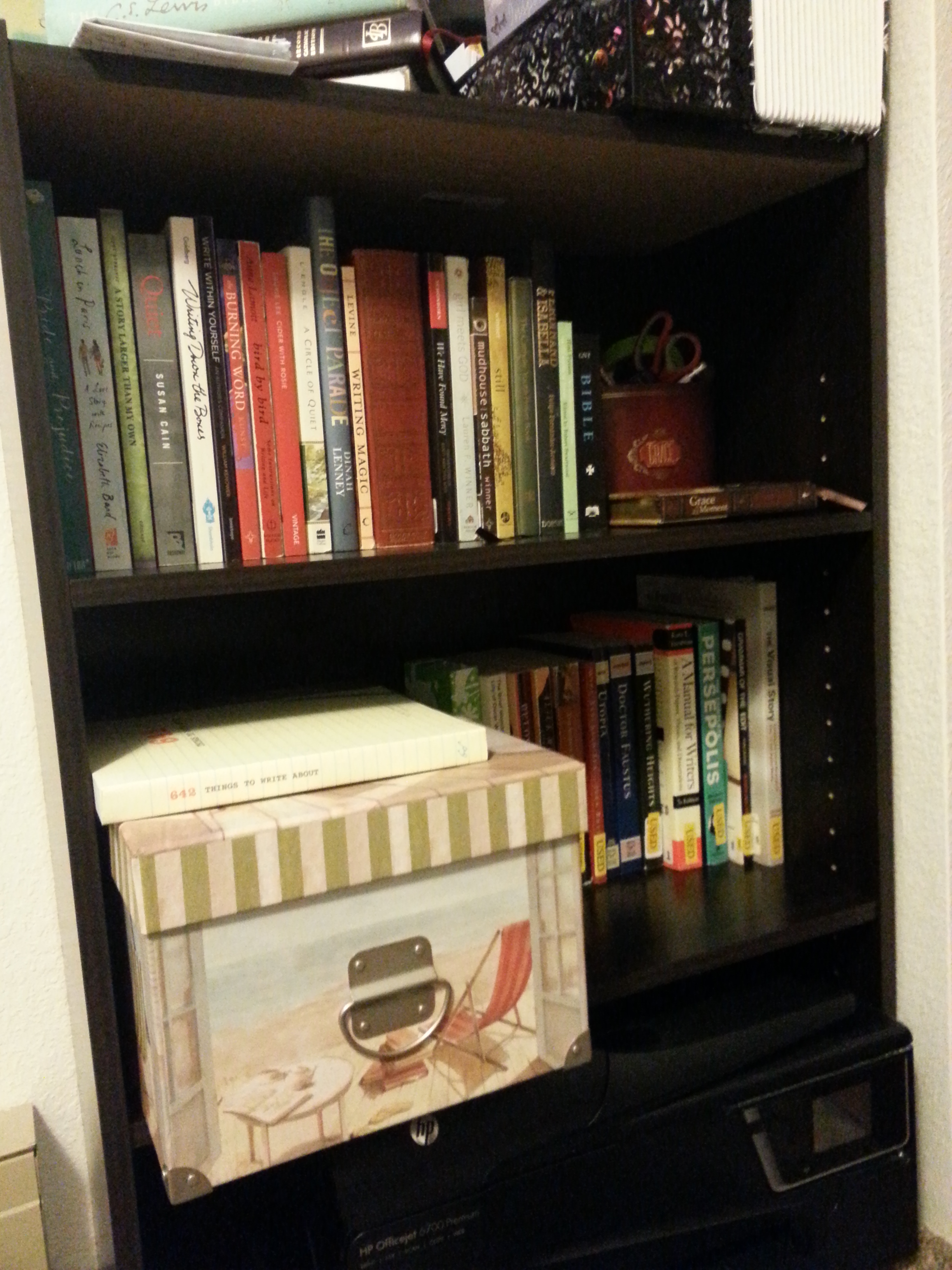
I sat on the floor of my room, curled like an apostrophe around a bookcase lying prone on the infuriatingly un-level carpet.  Holding the side of the bookcase against my knees, I clamped the shelf under my arm and twisted the screwdriver painfully with my right hand (I’m left-handed, so this took a fair bit of coordination).  It was nearing dinnertime, and I had a meeting to go to, but I was absolutely determined to get this thing put together.  Before I had to go anywhere, before I ate, before the Engineer came back from whatever he’d been doing all day, this bookcase would be upright and my books would be rescued from their homelessness.

This corner of my room had been driving me crazy for weeks.  My printer was perched precariously on a wobbly table with spindly legs.  My books were stacked as neatly as possibly in various corners of my room.  My papers were strewn in heaps under the printer and on the ledge running under my window.  Clearly, I needed a bookshelf.

What I had envisioned was a bookcase already assembled, perhaps one from a garage sale or a family member’s guest room, or even Goodwill.  Nothing fancy, of course, but already possessing nails and screws in all the vital places.

I found myself instead with this pressboard, “coffee cherry” finish kit from Shopko and a familiar stubborn voice in my head telling me I didn’t need anyone else to help me put it together.

And I was right.  I may have attached the bottom slightly crooked and had to redo it.  I may have had red lines that purpled into bruises on my legs from holding the pieces tightly together while I twisted the screws through.  I may have nailed the cardboard backing on so that it bubbles out a little bit at the bottom.  But it stands, and it holds my books, and I am happy.

My mother (who, as you may recall, also likes to rearrange furniture at times) put together the table and chairs in our breakfast nook at home all by herself.  She wrestled with the legs and heavy top, chased screws across the floor out of the cat’s reach, and threw a tablecloth over the finished product with a proud flourish.

I suspect I get some of my independence from her.

I’ve been fortunate enough to always have people to call if I need something moved, or built, or fixed.  But it’s nice to know that, should the need arise, my bright pink toolbox and I can probably figure things out.2015-09-08 16.24.20

Oh, You Don’t Want To

If I had a dollar for every time someone asked me, “And what are your plans after graduation?” I could probably pay for another year of college.

But that’s just kindly curiosity.  People are just being inquisitive, or concerned for my welfare, or even just making small talk.  I get that.  It’s what we ask as humans, isn’t it?  What are you going to be when you grow up?  What college are you going to?  What outcome are you aiming for after this Big Socially Recognized Transition?

What gets me is the number of opinions offered based on my answer, no matter what that answer is.  It’s usually, “I don’t know,” to which they reply, “Oh, you don’t want to decide anything now, you’re so young!”  If I elaborate, “Maybe grad school,” then the op-eds really start flying.

“Oh, you don’t want to get an MFA in creative writing – all you can do with that is teach.”  “Oh, you don’t want to study literature – all you can do with that is teach.”  “Oh, you don’t want to stay at the same school for your Master’s.”  “Oh, you don’t want to lose any momentum by taking a year off.”  “Oh, you don’t want to stay in school forever – work for a few years, then come back and get that degree.”

If I mention a job?

“Oh, you don’t want to stay here, publishing is much bigger in New York.”  “Oh, you don’t want to go into editing, there’s no money.”  “Oh, you don’t want to go too far from home.”  “Oh, you don’t want to get stuck in some office job, you’re much too smart for that.”  “Oh, you don’t want to waste any time, you should start networking now.”

And forget even hinting that the Engineer might come into it.

“Oh, you don’t want to make decisions based on a boyfriend.”  “Oh, you don’t want to do a long distance relationship, so few couples can handle that.”

And on and on it goes.

I’ve been calling these bits of speech opinions rather than advice.  That’s because of the four- or five-word formula at the beginning of each snippet: (oh) you don’t want to.

Don’t I, though?

Don’t I want, in some moments, to study more creative writing because it’s what I love?  Don’t I want, at times, to elbow my way into publishing regardless of the paycheck?  Don’t I want to take the person I’ve been dating for years into account?

How kind of these opinions, sensing my confusion, to tell me what I want.

I’m used to some of these.  I’ve heard them before.  “Don’t worry, lots of people change their majors,” acquaintances would say, trying to give me a way out after I told them I was majoring in creative writing.  Sounds an awful lot like, “Oh, you don’t want to do that.”  But I did, in fact, want to.  It was like Warner thinking Elle Woods couldn’t get into Harvard even after she, um, did. 

like it's hardMy chosen area of study, like Elle’s sudden decision to pursue law, has raised a few eyebrows.  It seems implausible that writing would maintain such a strong hold on me, especially in a society that places so much emphasis on money making.  I get it.  And, following up on those undergraduate doubts, it makes sense that people would make similar assumptions about my choices post-grad.

I know most of these people mean well.  They want to see me succeed, or at least not starve to death or bankrupt my parents within a year of graduation.  They probably believe that their opinions are, in fact, good advice, and I appreciate that intention.

That’s where I run into trouble.  I was raised to respect adults, to seek advice from those with more life experience than me.  So I don’t really want to just start arguing with everyone – “Oh, you don’t want to [insert action here]” “OH YES I DO COME AT ME BRO.”  But I don’t know how to politely disengage when the opinions are irrelevant to me (such as when the information is outdated or based on hearsay, or just has to do with their own worldviews that I don’t necessarily share).

And even if the advice underneath the opinion is sound, I can’t help chafing at that formula. You don’t want to.  Words carry weight in my world, and that particular phrase is like an anvil dropped from a Looney Tunes cliff.  If you know what I do and do not want – why did you ask in the first place?

My Life in Books, Part 1: The Formative Favorites

I can divide up my life by books: epochs of reading indicated by the particular volume that served as my security blanket, my favorite refuge, for that period.  These are the formative few that found me at exactly the moment I needed them.

1. Angelfish by Laurence Yep

41LEKDC-oYL._SX343_BO1,204,203,200_The W-Z shelf in my elementary school library formed a corner with another, lower shelf that, when I settled criss-cross onto the nubbly carpet, made me feel safe – walled up in a castle.  The books at eye level when I situated myself this way included Angelfish, which I checked out so many times throughout the years at St. C’s that the librarian gave me that copy as a graduation present at the end of 8th grade.  She said it was clearly mine.  I called it my Belle book, after the scene in Disney’s Beauty and the Beast when the bookseller gives Belle her favorite book free of charge.  The reason I read it 17 times in a single year is that Angelfish is a love story about a girl and dance.  Robin, the narrator, loves ballet so much she declares she will always find some way to be a part of it, even if it means just sweeping the stage.  “That’s the way you love something when you’re young,” her teacher responds.  The plot involves Robin helping a victim of the Chinese Revolution rediscover his own art – originally dance as well, now painting – and reaffirm the value of having that joy in one’s life.  Having quit my own ballet lessons years before, I probably couldn’t have told you in 8th grade why I loved this book so much.  Now I think I needed it to give me an example of how to hold on to your passion despite the naysayers.

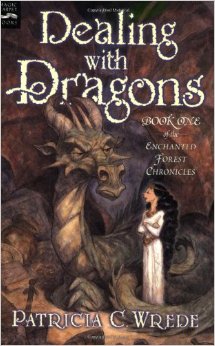
2. Dealing With Dragons by Patricia Wrede

51eC4uO6deL._SY344_BO1,204,203,200_This must have been one of my first feminist books.  The stubborn, witty heroine, Cimorene, gets bored being a princess, so she runs away to serve a dragon.  Although irritated by the conventions that bind her (dealing with all those princes trying to rescue her against her will, for instance), Cimorene also frequently uses her society’s stereotypes of silly princesses to her own advantage (e.g., getting an evil wizard to let slip a few details of his plan).  She finds a way of life that makes her happy and fulfilled even though few people originally understand her desires.  Beyond the quips and amusing dialogue that appealed to me as a sarcastic teenager, Dragons showed me that if you persist in chasing your dreams, you’ll find people who will listen to you.  The dragon she serves, for instance, believes Cimorene when everyone else wants to write her off as just another hysterical princess.  Plus there’s swordfighting.  Who doesn’t love swordfighting?

3. Girl Meets God by Lauren Winner

41unxgoV6iL._SY344_BO1,204,203,200_I gave up reading anything but religious books for Lent one year, and it led me to this memoir of a Jewish girl turned Episcopalian.  Nearly every page held a turn of phrase that made me think, “Yes, exactly,” or “I thought that was just me!”  In a section on Lent, the author’s priest asks her to give up reading for the liturgical season, and I nearly dropped the book in surprise.  I just saw so much of myself and my own questions and confusion about faith (and life in general) in this book, even though I was raised Catholic and intend to remain in the Church.  I love the honesty about the difficult parts of belief and the self-awareness the author demonstrates in her writing.  Once I finished the book, I immediately turned to the first page again, this time with a pencil to underline and annotate the parts that spoke to me the most.  Since then, I’ve read it nearly a dozen times, at least once a year, each time making new notes and looking back on my past self’s questions and scribbles about faith and life.

4. The Disreputable History of Frankie Landau-Banks by E. Lockhart

6a00d8345169e469e2016760e64a3f970bFrankie does not get the guy.  Her friends and family don’t accept her as she is.  But that’s not the point.  When I started high school, I could identify with Frankie’s sense of confinement within others’ perceptions of her.  Her family doesn’t deem her smart enough to use her cell phone when she gets lost or attend a prestigious boarding school without a nice boyfriend to “look after her.”  The boyfriend is not much better; although most of Frankie’s schemes are designed to earn his respect, she soon discovers that he preferred it when she was arm candy in need of his protection.  But she keeps going, realizing that she actually wants to prove something to herself more than to her boyfriend.  After that, others’ opinions don’t matter so much.  By the end, no one quite knows what to do with Frankie, except Frankie herself.  In my freshman year of high school, when I discovered this book, I had just been frozen out by the group of girls I used to rely on for approval.  I needed the self-discovery role model that Frankie provides.  And I needed the honesty of the last chapter: “She might go crazy…They do sometimes go crazy, these people, because the world is telling them not to want the things they want…another possibility – the possibility I hold out for – is that Frankie Landau-Banks will open the doors she is trying to get through.  And she will grow up to change the world.”

To Whom Much is Given

Mom, Bird, and I said grace before our meal in the food court at the mall last night.  No one shouted at us, threatened us, or asked us to leave.

We were at the mall to shop for dresses for a friend’s wedding later this summer.  Bird and I have never had to worry about whether or not our eventual marriages will be legally recognized in our home state.

I’ve been fortunate enough to live most of my life in a relatively tolerant community in one of the country’s most tolerant states.  I’ve been even more fortunate not to need this tolerance for my own sake, because I was born a white, middle-class, heterosexual female who identified as her biological gender.  I fell into pretty much every category of “majority” you can think of.  Admittedly, I didn’t realize just how blessed I was until I started college and the bubble of my existence dramatically widened (with the help of the internet, particularly Tumblr).

When the Supreme Court made its decision on marriage equality, I was overjoyed for my friends who could now plan the weddings of their dreams.  When I heard about the Charleston shooting, I mourned the victims – and got angry about the ignorance displayed by those who tried to dismiss the racist implications of the massacre.  I was still seeing these things from the outside, and I was not directly affected, but that does not excuse me from working to change things for the better.

I’m still learning, still developing my worldview (and I pray it won’t become as rigid and cemented in ignorance or partial knowledge as some of the people giving out their opinions like candy from a stranger’s van), still figuring out what I can do from here to help – or at least not make it worse.  I don’t know.  Sometimes it feels too big.

014b868afc10c6e19990969f956e90f6And I’m realizing that the best thing I can do is listen.  I don’t say this as if I can somehow validate others’ experiences simply because I, a privileged person, take the time to listen to them, people who have been denied something (or several somethings) that I have been blessed enough to have.  Their humanity validates their experiences.  We are all people no matter how many variables we can or cannot check off on a list of too-easy identifiers.  Yes, we are different, but that does not negate the intrinsic personhood or value of those different from me.

And my privilege or luck or whatever you want to call it does nothing if I let it drag me into complicity with the current value system that wrongs so many other people.  I guess what I’m working on is finding not the role that society tells me I should take up by virtue of all these things out of my control (ethnicity, sexuality, etc.), but a role in helping all of us crawl a little bit further out of that society’s reach to where we can start building and changing things.

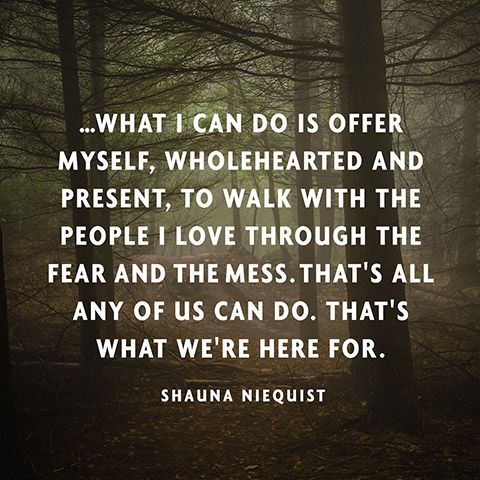
To do that, I’m going to have to learn.  And to learn, I’m going to have to listen.

It doesn’t feel like enough.  I wish I had more ideas, more answers, more words.  But at least I can demonstrate my respect for my fellow human beings and remain open to educating myself and others.

One of the most sincere forms of respect is actually listening to what another has to say.

~Bryant McGill

That Time I Almost Punched a Sexist

As a freshman in high school, I was the type of girl who enjoyed stepping menacingly toward my male friends when they said something that offended me, even though we all knew I would never actually lay a finger on them. Besides, I was too short to be scary. (I’m still short, but I sometimes pride myself on the ability to be menacing when necessary.)  Violence was not, in fact, my go-to problem solving strategy.

Still, I knew I would have a hard time not slapping the smirk off P.B.’s face the minute I met him.

calvin and susie bug

We were in English, one of the few classes in which I was not on the honors track because my high school did not have an honors English class for freshmen.  While by junior year I could happily spend 75% of the day away from those students to whom I was merely a nerd who took school too seriously, freshman English required me to rub shoulders with people who still stopped at the end of every line, whether or not there was a period, when reading aloud.  (The teacher also frequently asked my help spelling things on the board, which didn’t exactly inspire confidence in his pedantic abilities, but I digress.)

I don’t remember how it started – the teacher must have asked us to have a conversation about something in the lesson with a partner nearby – but somehow I found myself talking to P.B., who was twisted around from his seat in front of me and was draping one lanky arm across my open copy of Lord of the Flies.  Glaring, I slid it out from under him so he wouldn’t wrinkle the page.  Whatever we were originally supposed to be discussing, the conversation turned to grades and schedules.  He bragged that he had a B+ in the class, to which I nodded approval.

I was less approving of his shock at the fact that I had a high A.  He began quizzing me on my grades and how many honors classes I was in.  At first I didn’t care, but it quickly grew satisfying to see him attempting to process the idea that I was probably beating him in the GPA department.

“Well, I must have a higher grade than you in math,” he said finally, leaning back against the metal bar connecting his chair to his desk.  (His arm was still across my desk.)

I rolled my eyes.  “I’m in Geometry Honors and you’re in Algebra,” I said, trying to point out that he couldn’t really compare our grades there because we were studying entirely different things.

He smirked patronizingly.  “I’m still probably better than you.”

“Why would you assume that?”

“Because guys are better at it than girls.  You just aren’t smart enough to think that way.”  The most remarkable thing, now that I look back on it, is his tone – there was no malice.  He was simply stating something of which he was utterly convinced.

“That…is..the most sexist thing I’ve ever heard,” I said, trying to control my tone.

He shrugged.  “It’s true.”

Almost unconsciously, as though independent from my body, my left hand curled into a fist and my elbow drew back as though I was about to fire an arrow from a bow.  I had never punched anyone before, but P.B. was about to be the lucky first.

Until my teacher materialized at my side and asked, “How’s the conversation going here?” a little too brightly, having seen it all unfold from across the room.  I honestly don’t remember the rest of that class, although I do remember that when we next came to English the teacher announced we had new seats and P.B. was diagonally opposite me, literally as far away as the teacher could physically place us.  This was probably a wise move.

This incident, one of my earliest face-to-face encounters with the concept of sexism, sticks with me for several reasons.

One, I had never realized that people could be so certain of something that I found so obviously wrong.  P.B. was jeering at me, but he was just as convinced that females were inferior as I was convinced that the earth is round.  We had discussed discrimination and assumptions about women’s abilities in my family before (see: weirdest dinner conversations ever), but it hadn’t really dawned on me that there were people – people in my day-to-day world, no less – who actually thought of me that way. It was suddenly and newly personal.

Two, because it was one of the first times I had ever come right up against sexism, I had no idea how to react.  I was angry, but I didn’t have the vocabulary to correct him or explain to him why his certainty had no actual support.  (Sometimes I wonder, though, if one good punch would have convinced him much faster that girls are just as good as boys…kidding, kidding!  Mostly.)  And I realized how much I – and all the girls around me – needed to develop that vocabulary.